S.T.O.R.I.E.S.

Historical Timeline

Sequential Timeline of Racist Incidents, Events, and Sites

1969
1969
institutional policy

Nixon's Minority Business Development Agency

President Richard Nixon established the Minority Business Development Agency (MBDA) to fund and support minority-run businesses, promoting 'Black Capitalism' as a policy response to economic inequality. The agency aimed to address the limited impact of previous affirmative action and government assistance to …

Washington, D.C., DC
African American Civil rights movement
Read more about this entry
President Richard Nixon established the Minority Business Development Agency (MBDA) to fund and support minority-run businesses, promoting 'Black Capitalism' as a policy response to economic inequality. The agency aimed to address the limited impact of previous affirmative action and government assistance to Black-owned enterprises[2]. This policy reflected a shift toward economic empowerment within the Nixon administration's approach to civil rights[2].
1969
institutional cultural violence

Greensboro Uprising

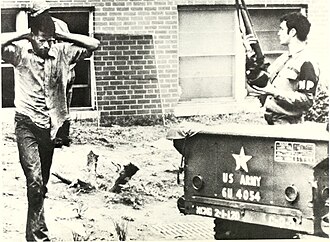
The 1969 Greensboro uprising was a white-on-Black racial disturbance occurring during protests against police brutality and segregation in the city. It represented a distinct pattern of white resistance to civil rights demonstrations, contrasting with the African American ghetto riots of the mid-1960s[10]. …

Greensboro, North Carolina, NC
African American Civil rights movement Jim Crow Policing Racial violence
Read more about this entry
The 1969 Greensboro uprising was a white-on-Black racial disturbance occurring during protests against police brutality and segregation in the city. It represented a distinct pattern of white resistance to civil rights demonstrations, contrasting with the African American ghetto riots of the mid-1960s[10]. The event highlighted ongoing racial tensions in the South despite federal civil rights legislation[10].
1968
1968
cultural discrimination

Latino Movement Emergence in the Southwest

By the late 1960s, the Latino movement emerged in the Southwest, organizing protests against educational discrimination and police brutality similar to Black Power. Latino activists established community schools and demanded culturally relevant curricula, reflecting the broader trend of minority self-determination movements[4]. This …

Los Angeles, California, CA
African American Civil rights movement Education & schools Latino Policing
Read more about this entry
By the late 1960s, the Latino movement emerged in the Southwest, organizing protests against educational discrimination and police brutality similar to Black Power. Latino activists established community schools and demanded culturally relevant curricula, reflecting the broader trend of minority self-determination movements[4]. This period marked the rise of Chicano activism as a distinct force in the civil rights era[4].
1968
cultural discrimination

American Indian Movement (AIM) Founded

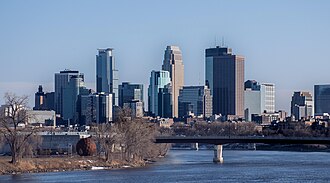
The American Indian Movement (AIM) was founded in Minneapolis by Dennis Banks and Clyde Bellecourt to address police brutality, poverty, and discrimination against Indigenous people. AIM adopted tactics of protest and self-determination similar to Black Power, focusing on tribal sovereignty and community …

Minneapolis, Minnesota, MN
African American Indigenous Jim Crow Policing
Read more about this entry
The American Indian Movement (AIM) was founded in Minneapolis by Dennis Banks and Clyde Bellecourt to address police brutality, poverty, and discrimination against Indigenous people. AIM adopted tactics of protest and self-determination similar to Black Power, focusing on tribal sovereignty and community control[6]. The organization became a central force in Indigenous resistance, leading to events like the Alcatraz occupation and the Wounded Knee incident[6].
1968
institutional discrimination

Tommie Smith and John Carlos Black Power Salute

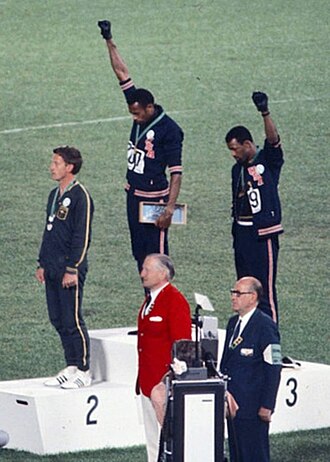
At the 1968 Olympics, African-American athletes Tommie Smith and John Carlos raised their fists in a black power salute after winning the 200 meters, wearing boots and socks to protest poverty and racism. This global act of resistance symbolized the Black Power …

Mexico City (Olympics), US
African American Jim Crow
Read more about this entry
At the 1968 Olympics, African-American athletes Tommie Smith and John Carlos raised their fists in a black power salute after winning the 200 meters, wearing boots and socks to protest poverty and racism. This global act of resistance symbolized the Black Power movement's demand for self-determination and human rights over integration[1][6]. The salute sparked international debate on racial justice and athlete activism[1].
1968
cultural violence

Assassination of Martin Luther King Jr.

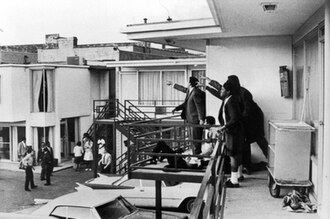
Martin Luther King Jr. was assassinated at the Lorraine Motel in Memphis while supporting striking sanitation workers. His death triggered violent disturbances in over 125 cities across the U.S. The assassination marked a turning point in the civil rights movement, leading to …

Memphis, Tennessee, TN
Civil rights movement Racial violence
Read more about this entry
Martin Luther King Jr. was assassinated at the Lorraine Motel in Memphis while supporting striking sanitation workers. His death triggered violent disturbances in over 125 cities across the U.S. The assassination marked a turning point in the civil rights movement, leading to increased militancy and a shift in strategy.
1968
cultural violence

1968 Miami (Liberty City) Race Riot

Rioting erupted in Liberty City after police officers were acquitted for killing an unarmed Black man, Arthur McDuffie. The unrest lasted two days, resulting in 15 deaths, 400 injuries, and extensive property damage. It was described as the worst race riot in …

Miami, Florida, FL
African American Policing Racial violence
Read more about this entry
Rioting erupted in Liberty City after police officers were acquitted for killing an unarmed Black man, Arthur McDuffie. The unrest lasted two days, resulting in 15 deaths, 400 injuries, and extensive property damage. It was described as the worst race riot in the nation since Detroit in 1967, undersstanding persistent racial tensions between police and minority communities.
1968
institutional cultural legislation

Fair Housing Act of 1968

Signed by President Lyndon B. Johnson, this act prohibited racial discrimination in the sale, rental, and financing of most housing units nationwide. It was the first federal law to explicitly address housing discrimination and aimed to dismantle de jure and de facto …

Washington, D.C., US
Housing & redlining Jim Crow
Read more about this entry
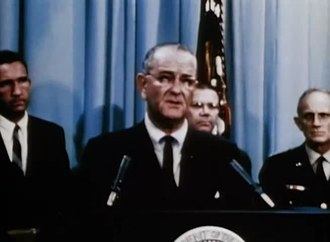
Signed by President Lyndon B. Johnson, this act prohibited racial discrimination in the sale, rental, and financing of most housing units nationwide. It was the first federal law to explicitly address housing discrimination and aimed to dismantle de jure and de facto segregation in residential areas. The act was passed in the aftermath of Martin Luther King Jr.'s assassination.
1968
cultural violence

Orangeburg Massacre

Highway patrol officers fired on Black students protesting a segregated bowling alley near South Carolina State University, killing three and wounding dozens.

Orangeburg, South Carolina, SC
African American Civil rights movement Education & schools Jim Crow Policing Racial violence
Read more about this entry
Highway patrol officers fired on Black students protesting a segregated bowling alley near South Carolina State University, killing three and wounding dozens.
1967
1967
cultural discrimination

Operation Breadbasket Campaign

Jesse Jackson led Operation Breadbasket under the banner of requiring grocery store chains to buy and display products from Black-owned small businesses. This campaign was part of the broader Black Power movement's push for economic justice and community control beyond legal equality[9]. …

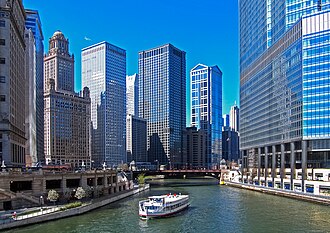
Chicago, Illinois, IL
African American Jim Crow
Read more about this entry
Jesse Jackson led Operation Breadbasket under the banner of requiring grocery store chains to buy and display products from Black-owned small businesses. This campaign was part of the broader Black Power movement's push for economic justice and community control beyond legal equality[9]. It targeted systemic economic discrimination in Chicago's retail sector[9].
1967
cultural violence

1967 Long, Hot Summer of Riots

During the summer of 1967, major urban rebellions erupted in Newark and Detroit, among nearly 160 cities nationwide, driven by police brutality and poverty. The Detroit riot was particularly deadly, with 34 people killed and massive property destruction, representing the largest and …

Newark, New Jersey; Detroit, Michigan, NJ
African American Civil rights movement Policing Racial violence
Read more about this entry
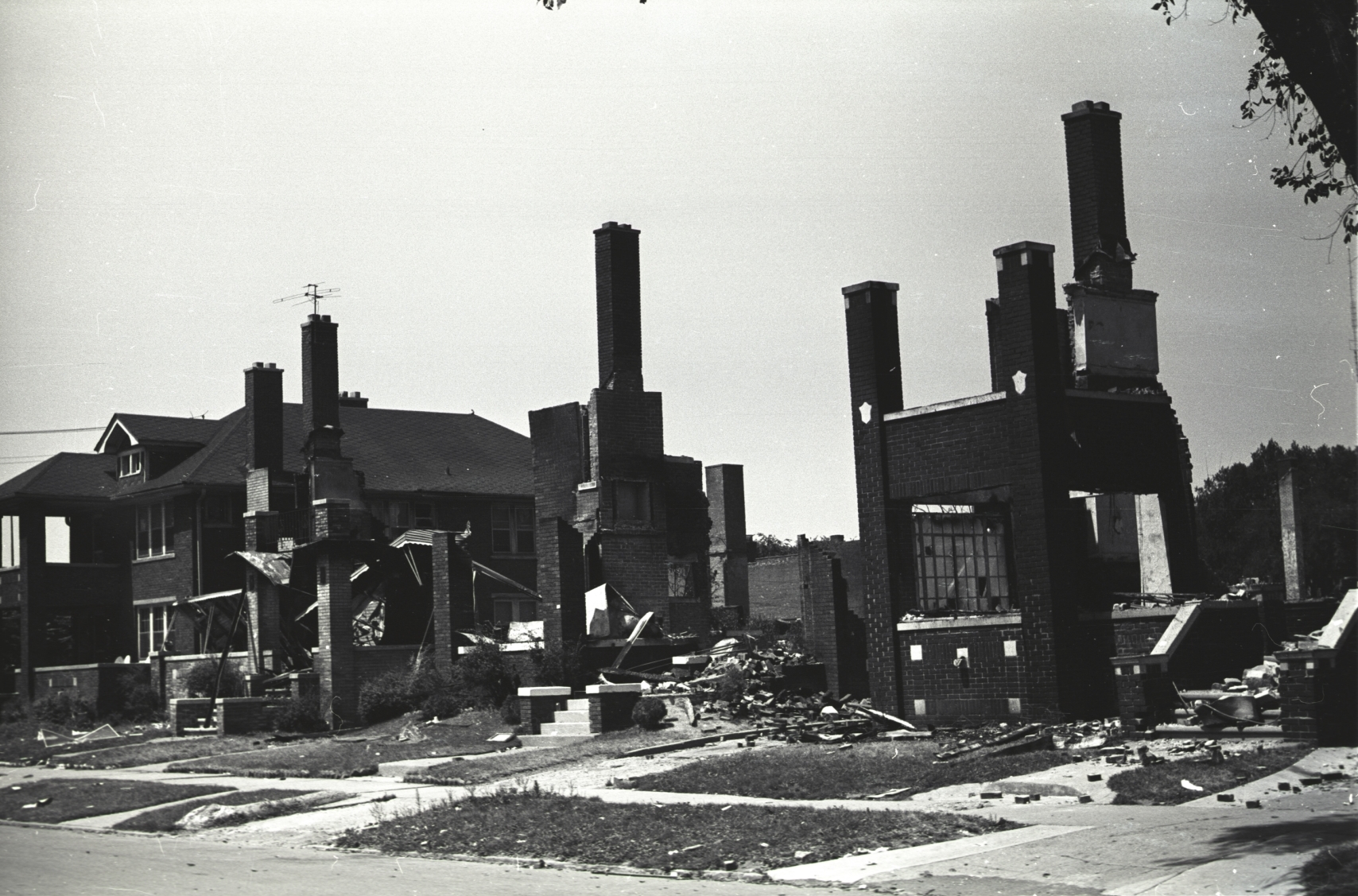
During the summer of 1967, major urban rebellions erupted in Newark and Detroit, among nearly 160 cities nationwide, driven by police brutality and poverty. The Detroit riot was particularly deadly, with 34 people killed and massive property destruction, representing the largest and most violent of the African American ghetto riots during the civil rights era[1][10]. These events highlighted the failure of integrationist policies to address economic inequality[5].
1967
court case discrimination

Loving v. Virginia

The Supreme Court unanimously held that laws banning interracial marriage violated the Equal Protection Clause and Due Process Clause of the Fourteenth Amendment[2]. The case involved Mildred Loving, a Black woman, and Richard Loving, a white man, who were convicted under Virginia's …

Caroline County, Virginia, VA
African American Jim Crow
Read more about this entry
The Supreme Court unanimously held that laws banning interracial marriage violated the Equal Protection Clause and Due Process Clause of the Fourteenth Amendment[2]. The case involved Mildred Loving, a Black woman, and Richard Loving, a white man, who were convicted under Virginia's Racial Integrity Act[2]. This decision struck down anti-miscegenation laws in 16 states, ending legal barriers to interracial marriage nationwide[2].
1967
institutional discrimination

Milwaukee Open Housing Marches

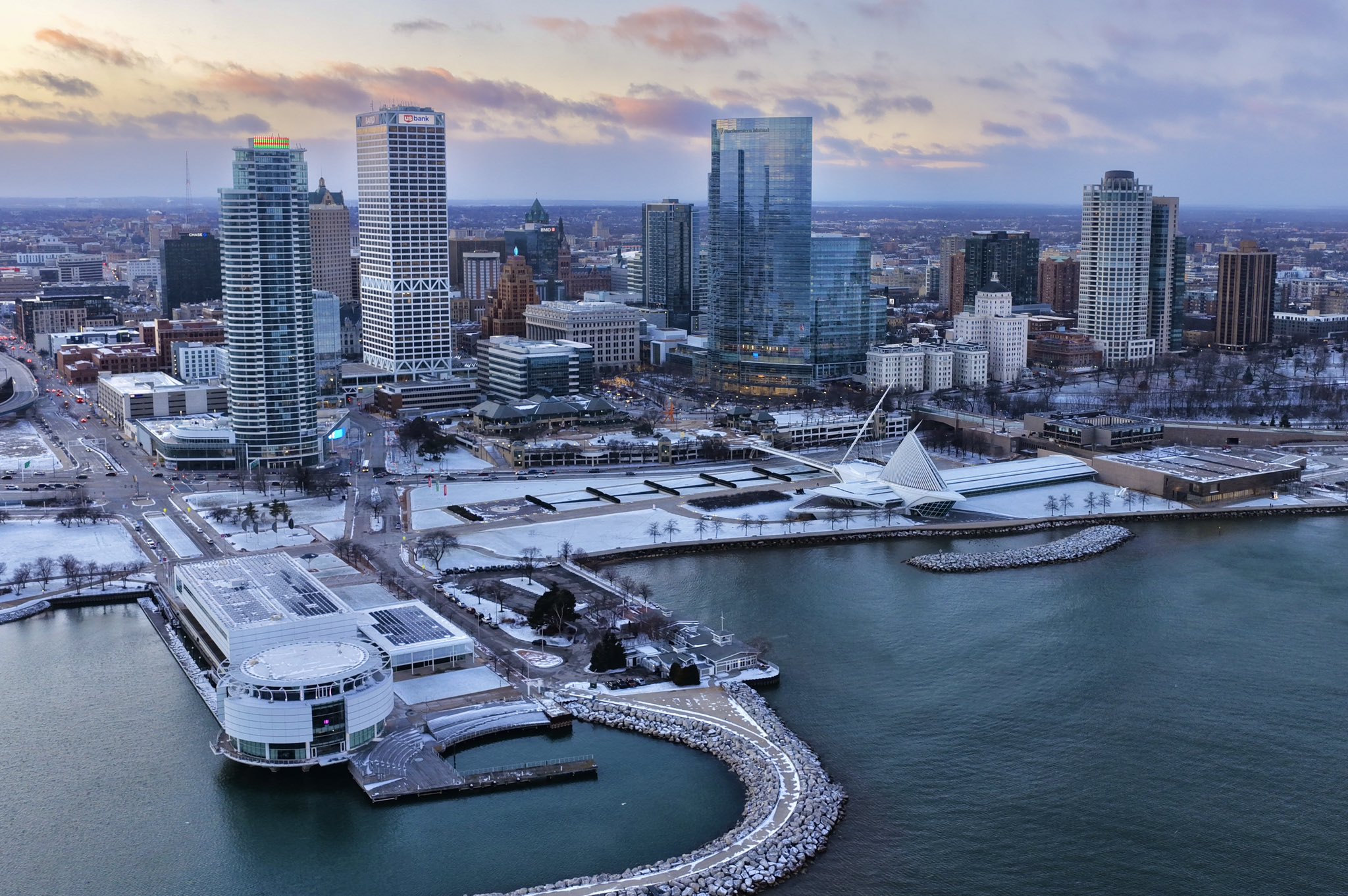
Father James Groppi and the NAACP Youth Council led 200 consecutive nights of open-housing marches across Milwaukee's 16th Street Viaduct, challenging Northern residential segregation.

Milwaukee, Wisconsin, WI
African American Civil rights movement Housing & redlining Jim Crow
Read more about this entry
Father James Groppi and the NAACP Youth Council led 200 consecutive nights of open-housing marches across Milwaukee's 16th Street Viaduct, challenging Northern residential segregation.
1967
institutional cultural violence

Detroit Race Riot / Rebellion

A police raid sparked days of uprising amid housing discrimination, unemployment, and police abuse; the rebellion left dozens dead and accelerated white flight and urban policy debates.

Detroit, Michigan, MI
Housing & redlining Policing Racial violence
Read more about this entry
A police raid sparked days of uprising amid housing discrimination, unemployment, and police abuse; the rebellion left dozens dead and accelerated white flight and urban policy debates.
1966
1966
cultural violence

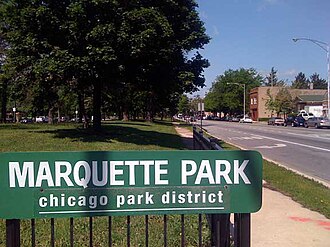
Marquette Park Marches

In August 1966, the Chicago Open Housing Movement included marches through Marquette Park, where white mobs violently attacked nonviolent Black protesters and civil rights leaders. The attacks involved rocks, bottles, and racial epithets, marking a significant instance of white-on-Black racial disturbance during …

Chicago, Illinois, IL
African American Civil rights movement Housing & redlining Racial violence
Read more about this entry
In August 1966, the Chicago Open Housing Movement included marches through Marquette Park, where white mobs violently attacked nonviolent Black protesters and civil rights leaders. The attacks involved rocks, bottles, and racial epithets, marking a significant instance of white-on-Black racial disturbance during the civil rights era[1][10]. The violence underscored the fierce resistance to open housing in Northern cities[1].
1966
cultural discrimination

Black Panther Party Founded

Huey Newton and Bobby Seale founded the Black Panther Party for Self-Defense in Oakland, emphasizing Black self-reliance, armed self-defense against police brutality, and community control. The party rejected passive resistance, demanding economic justice and political power over their own schools and businesses[5][11]. …

Oakland, California, CA
African American Education & schools Jim Crow Policing
Read more about this entry
Huey Newton and Bobby Seale founded the Black Panther Party for Self-Defense in Oakland, emphasizing Black self-reliance, armed self-defense against police brutality, and community control. The party rejected passive resistance, demanding economic justice and political power over their own schools and businesses[5][11]. Their formation marked a major shift toward the Black Power movement's ideology of self-determination[6][11].
1966
cultural discrimination

Chicago Open Housing Movement

Martin Luther King Jr. led mass marches and rallies demanding open housing policies from Mayor Richard J. Daley and the city of Chicago. White mobs attacked nonviolent protesters, resulting in significant tension and violence during the campaign. The movement concluded with a …

Chicago, Illinois, IL
Civil rights movement Housing & redlining Racial violence
Read more about this entry
Martin Luther King Jr. led mass marches and rallies demanding open housing policies from Mayor Richard J. Daley and the city of Chicago. White mobs attacked nonviolent protesters, resulting in significant tension and violence during the campaign. The movement concluded with a Summit Conference that produced the Summit Agreement, committing real estate agents to ensure minority access to housing[1][9].
1966
cultural discrimination

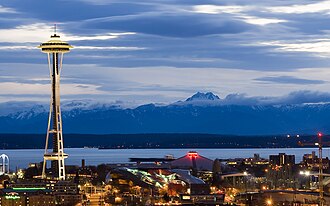
Seattle School Boycott Against Segregation

Black community leaders organized a school boycott to protest de facto segregation in Seattle public schools, part of a broader Western civil rights struggle often overshadowed by Southern campaigns.

Seattle, Washington, WA
African American Civil rights movement Education & schools Jim Crow
Read more about this entry
Black community leaders organized a school boycott to protest de facto segregation in Seattle public schools, part of a broader Western civil rights struggle often overshadowed by Southern campaigns.
1965
1965
cultural violence

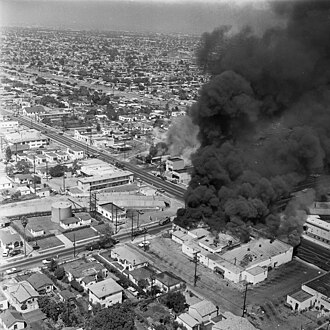
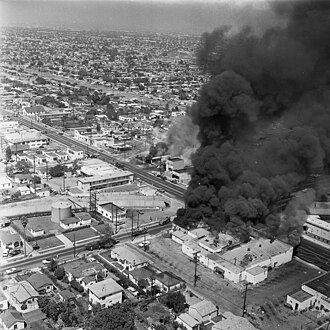
Watts Riots

Beginning August 11, 1965, violent confrontations between Los Angeles police and residents of Watts and other predominantly African American neighborhoods lasted six days after the arrest of 21-year-old Black motorist Marquette Frye. The riots resulted in 34 deaths, over 1,000 injuries, 4,000 …

Los Angeles, California, CA
African American Policing Racial violence
Read more about this entry
Beginning August 11, 1965, violent confrontations between Los Angeles police and residents of Watts and other predominantly African American neighborhoods lasted six days after the arrest of 21-year-old Black motorist Marquette Frye. The riots resulted in 34 deaths, over 1,000 injuries, 4,000 arrests, and more than $40 million in property damage. The uprising was a major response to systemic police brutality and racial discrimination.
1965
cultural violence

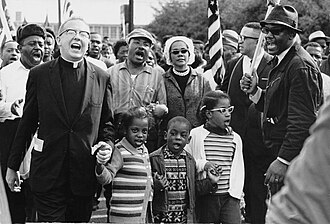
'Bloody Sunday' Selma March Attack

On March 7, 1965, six hundred Alabama civil rights activists staging a Selma-to-Montgomery protest march were viciously attacked by Alabama State Troopers. The marchers were beaten and驱赶 to draw attention to the denial of black voting rights in the state. The national …

Selma, Alabama, AL
African American Civil rights movement Racial violence Voting rights
Read more about this entry
On March 7, 1965, six hundred Alabama civil rights activists staging a Selma-to-Montgomery protest march were viciously attacked by Alabama State Troopers. The marchers were beaten and驱赶 to draw attention to the denial of black voting rights in the state. The national response to this televised violence contributed directly to the passing of the Voting Rights Act later that year.
1965
cultural violence

Watts Riots

Beginning on August 11, 1965, and lasting six days, the Watts riots were violent confrontations between Los Angeles police and residents of predominantly African American neighborhoods. The riots resulted in 34 deaths, over 1,000 injuries, and more than $40 million in property …

Los Angeles, California, CA
African American Policing Racial violence
Read more about this entry
Beginning on August 11, 1965, and lasting six days, the Watts riots were violent confrontations between Los Angeles police and residents of predominantly African American neighborhoods. The riots resulted in 34 deaths, over 1,000 injuries, and more than $40 million in property damage. The event is a major catalyst for the militant Black Power movement.
1965
cultural violence

Assassination of Malcolm X

On February 21, 1965, civil rights leader Malcolm X was shot and killed while preparing to address the Organization of Afro-American Unity at the Audubon Ballroom in Manhattan. Three gunmen fired on him, including one with a sawed-off shotgun, and he was …

Audubon Ballroom, Washington Heights, Manhattan, New York City, NY
Civil rights movement Racial violence
Read more about this entry
On February 21, 1965, civil rights leader Malcolm X was shot and killed while preparing to address the Organization of Afro-American Unity at the Audubon Ballroom in Manhattan. Three gunmen fired on him, including one with a sawed-off shotgun, and he was pronounced dead at Columbia Presbyterian Hospital shortly after arriving[1][2]. The assassination occurred two years after the murder of John F. Kennedy and is considered one of the four major assassinations of the 1960s in the United States[5].
1965
cultural violence

Watts Riots

Beginning on August 11, 1965, the Watts Riots were a series of violent confrontations between Los Angeles police and residents of predominantly African American neighborhoods in South-Central Los Angeles. The riots lasted six days, resulting in 34 deaths, more than 1,000 injuries, …

Los Angeles, California, CA
African American Policing Racial violence
Read more about this entry
Beginning on August 11, 1965, the Watts Riots were a series of violent confrontations between Los Angeles police and residents of predominantly African American neighborhoods in South-Central Los Angeles. The riots lasted six days, resulting in 34 deaths, more than 1,000 injuries, and over $40 million in property damage. The uprising erupted after the arrest of 21-year-old Marquette Frye, a Black motorist, by a white highway patrolman.
1965
institutional policy

Selma to Montgomery Marches (1965)

On March 7, 1965, peaceful protesters attempting to march from Selma to Montgomery were violently attacked by state troopers on the Edmund Pettus Bridge, an event known as 'Bloody Sunday'[3]. The broadcast images of the violence sparked national outrage and led directly …

Selma, Alabama, AL
Civil rights movement Voting rights
Read more about this entry
On March 7, 1965, peaceful protesters attempting to march from Selma to Montgomery were violently attacked by state troopers on the Edmund Pettus Bridge, an event known as 'Bloody Sunday'[3]. The broadcast images of the violence sparked national outrage and led directly to the passage of the Voting Rights Act of 1965[3].