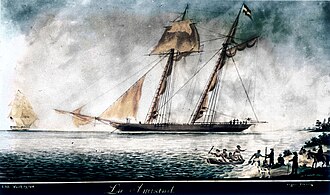
Amistad Captives Brought to Connecticut
Africans who seized the schooner Amistad were jailed in Connecticut; their legal fight culminated in a U.S. Supreme Court decision affirming their freedom and became a landmark antislavery case.
S.T.O.R.I.E.S.
Sequential Timeline of Racist Incidents, Events, and Sites
Africans who seized the schooner Amistad were jailed in Connecticut; their legal fight culminated in a U.S. Supreme Court decision affirming their freedom and became a landmark antislavery case.
The U.S. government forcibly removed approximately 16,000 Cherokee people from their ancestral lands in the Southeast to Indian Territory in present-day Oklahoma. Over 4,000 Cherokee died from disease, starvation, and exposure during the 1,000-mile journey known as the Trail of Tears[5]. The …
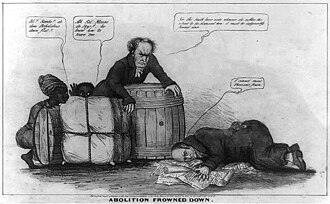
In 1836, the U.S. Congress adopted the 'gag rule,' which automatically tabled all petitions regarding slavery, preventing their discussion or debate in the House of Representatives[1]. This policy effectively silenced abolitionist efforts in Congress and protected the institution of slavery from legislative …
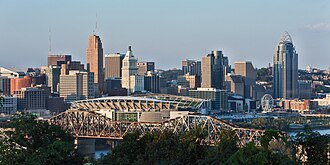
Anti-abolition mobs repeatedly attacked Black neighborhoods and antislavery presses in Cincinnati, illustrating Northern hostility to Black freedom even in free states.
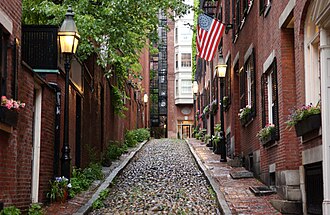
In 1835, numerous riots erupted throughout Boston targeting abolitionists and Black residents, known as the Gentleman's Riot[1]. The violence was part of a broader pattern of anti-abolitionist and racial unrest in the North[1]. It resulted in the destruction of abolitionist meeting halls …
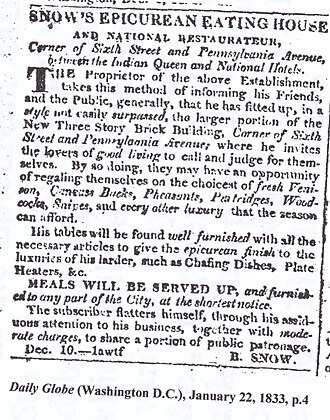
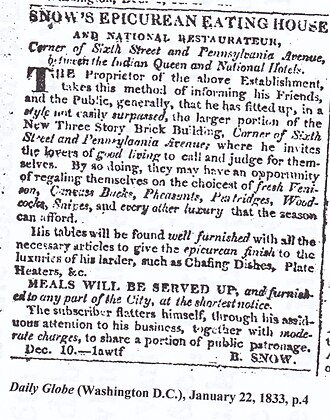
In August 1835, a white mob targeted Black residents and abolitionists in Washington, D.C., destroying businesses and homes in the Snow Riot[1]. The riot was sparked by racial tensions and anti-abolitionist sentiment[1]. It resulted in the displacement of many Black residents and …
In 1835, numerous riots occurred throughout Boston targeting abolitionists and Black communities, including the Gentleman's Riot. The violence was part of widespread anti-abolitionist and anti-Black riots across the Northeast in 1835[1]. The riots reflected intense opposition to racial equality and abolition movements[1].
In August 1835, a white mob destroyed Noyes Academy, one of the first schools in New England to admit Black students alongside white students. The academy was dragged away by 150 teams of horses and completely demolished[1]. The destruction was part of …
In August 1835, a white mob targeted Black businesses and residents in Washington, D.C., destroying the business of Henry Snow, a Black barber, and attacking other Black establishments. The riot lasted several days and was part of numerous anti-Black riots throughout 1835[1]. …
The first recorded lynching of an African American occurred in St. Louis in 1835, when a white mob killed a Black man named Dyer[9]. This event marked the beginning of systematic lynching as a tool of racial terror against Black Americans[9]. It …
The first recorded lynching of an African American occurred in St. Louis, Missouri. This act of racial violence marked the beginning of a pattern of extrajudicial killings used to enforce racial hierarchy and suppress Black communities. The event underscores the early emergence …
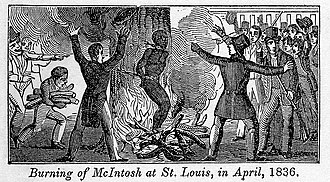
In April 1835, free African American Francis McIntosh was captured by a mob in St. Louis after fatally stabbing Deputy Sheriff George Hammond while resisting arrest[4][6]. The mob chained McIntosh to a locust tree at the corner of Seventh and Chestnut streets …
In 1834, an anti-abolitionist riot occurred in New York City, representing early organized resistance to the abolition of slavery. The riot was part of a broader pattern of racial and political violence in the decades leading up to the Civil War. This …
The American Anti-Slavery Society was established in Philadelphia, becoming the first national organization dedicated to the immediate abolition of slavery. It mobilized thousands of members across the North to promote emancipation through petitions, lectures, and publications. The society played a central role …
Around 1831, abolitionism took a radical and religious turn, with many abolitionists demanding immediate emancipation rather than gradual reform[9]. William Lloyd Garrison's publication of The Liberator catalyzed this shift, making abolitionism more confrontational and morally absolute[9]. This ideological transformation reshaped the national …
Abolitionist William Lloyd Garrison began publishing The Liberator, a greatly influential anti-slavery newspaper that demanded immediate emancipation. This publication marked when abolitionism took a radical and religious turn, with many abolitionists demanding immediate freedom for enslaved people. The newspaper became a cornerstone …
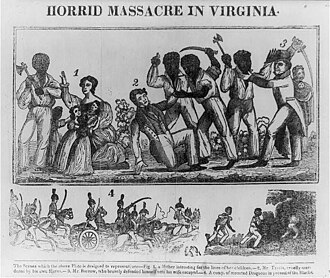
In August 1831, enslaved man Nat Turner led a rebellion killing at least 55 white persons, the largest slave revolt in American history. Whites retaliated by killing about 100 Black people, many not involved in the revolt, during the search for Turner …
Abolitionist William Lloyd Garrison began publishing The Liberator, a highly influential newspaper that demanded immediate emancipation of slaves. The publication marked a radical and religious turn in abolitionism, galvanizing the movement against slavery. Its influence helped shift public discourse toward immediate abolition …
Nat Turner, a literate enslaved man, led the largest slave revolt in American history, killing nearly 60 white inhabitants, mostly women and children. The revolt was crushed, and numerous African Americans, many not involved in the uprising, were killed in retaliation. Slave …
President Andrew Jackson signed the Indian Removal Act, voiding existing treaties with Native American nations and forcing them to relocate to Indian Territory west of the Mississippi River. The act led to the forced migration known as the Trail of Tears, displacing …