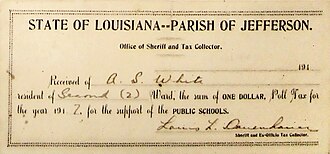
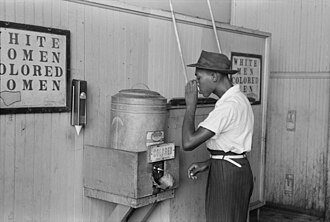
Georgia passed a new constitution implementing literacy tests and poll taxes to disenfranchise Black voters, following Mississippi’s 1890 model. These measures were applied selectively to exclude African Americans while often exempting poor whites through exemptions. The law drastically reduced Black voting rates …
📍Atlanta, Georgia, GA
👤African AmericanVoting rights
Read more about this entry
Georgia passed a new constitution implementing literacy tests and poll taxes to disenfranchise Black voters, following Mississippi’s 1890 model. These measures were applied selectively to exclude African Americans while often exempting poor whites through exemptions. The law drastically reduced Black voting rates in the state.
The Dawes Act (Indian Appropriations Act of 1887) authorized the federal government to divide Native American tribal lands into individual allotments, breaking up communal land ownership. This policy aimed to assimilate Indigenous peoples by forcing them into private farming and undermining tribal …
📍Washington, D.C., DC
👤IndigenousLand & treaties
Read more about this entry
The Dawes Act (Indian Appropriations Act of 1887) authorized the federal government to divide Native American tribal lands into individual allotments, breaking up communal land ownership. This policy aimed to assimilate Indigenous peoples by forcing them into private farming and undermining tribal sovereignty. Millions of acres of Native land were subsequently sold to non-Native settlers.
The Dawes Act (1887) authorized the breakup of tribal lands into individual allotments, leading to the loss of over 90 million acres of Native land by 1934 [7]. By the 1890s, the policy was actively enforced, dismantling communal land ownership and forcing …
📍Washington, DC, DC
👤IndigenousLand & treaties
Read more about this entry
The Dawes Act (1887) authorized the breakup of tribal lands into individual allotments, leading to the loss of over 90 million acres of Native land by 1934 [7]. By the 1890s, the policy was actively enforced, dismantling communal land ownership and forcing assimilation [7].
The Supreme Court ruled that a law not discriminatory on its face but administered in a discriminatory way violates the Equal Protection Clause[2]. The case involved a Chinese laundryman, Yick Wo, who was denied a permit under San Francisco's wooden structure ordinance …
📍San Francisco, California, CA
👤Asian AmericanJim Crow
Read more about this entry
The Supreme Court ruled that a law not discriminatory on its face but administered in a discriminatory way violates the Equal Protection Clause[2]. The case involved a Chinese laundryman, Yick Wo, who was denied a permit under San Francisco's wooden structure ordinance that was enforced selectively against Asian Americans[2]. This decision established early protections against discriminatory enforcement of laws targeting minority communities[2].
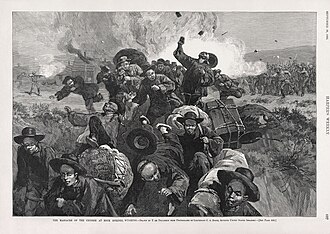
A white mob attacked Chinese miners in Rock Springs, killing 28 and injuring 15, while destroying homes and businesses. The massacre was driven by labor competition and anti-Asian racism in the western mining regions. It exemplifies the violent hatred Chinese Americans faced …
📍Rock Springs, Wyoming, WY
👤Asian AmericanLaborRacial violence
Read more about this entry
A white mob attacked Chinese miners in Rock Springs, killing 28 and injuring 15, while destroying homes and businesses. The massacre was driven by labor competition and anti-Asian racism in the western mining regions. It exemplifies the violent hatred Chinese Americans faced in the American West during the late 19th century.
In a group of five cases, the Supreme Court held that the Thirteenth and Fourteenth Amendments did not empower Congress to outlaw racial discrimination by private individuals[8]. The Court ruled that the Fourteenth Amendment only prohibited state-sponsored denial of equal protection, not …
📍Washington, D.C., DC
👤African AmericanCivil rights movement
Read more about this entry
In a group of five cases, the Supreme Court held that the Thirteenth and Fourteenth Amendments did not empower Congress to outlaw racial discrimination by private individuals[8]. The Court ruled that the Fourteenth Amendment only prohibited state-sponsored denial of equal protection, not private acts of racism[8]. This decision effectively nullified the Civil Rights Act of 1875 and left Black Americans unprotected from private discrimination for decades[8].
Federal law barred most Chinese immigration and denied naturalization to Chinese residents—the first major U.S. law restricting immigration by nationality. Repealed in stages; remains a landmark of race-based immigration policy.
Tennessee became the first state to pass a Jim Crow law, mandating that Black and white passengers ride in separate railroad cars. This law established the legal framework for racial segregation in public transportation that would spread across the South. The legislation …
📍Nashville, Tennessee, TN
👤African AmericanJim Crow
Read more about this entry
Tennessee became the first state to pass a Jim Crow law, mandating that Black and white passengers ride in separate railroad cars. This law established the legal framework for racial segregation in public transportation that would spread across the South. The legislation marked the beginning of systematic state-sponsored segregation following the end of Reconstruction.