S.T.O.R.I.E.S.

Historical Timeline

Sequential Timeline of Racist Incidents, Events, and Sites

1789
1789
institutional cultural legislation

Three-Fifths Clause Adopted in U.S. Constitution

The U.S. Constitution, ratified in 1789, included the Three-Fifths Clause (Article I, Section 2), counting enslaved persons as three-fifths of a person for congressional representation and taxation. This provision amplified the political power of slaveholding states while denying enslaved Black people any …

Philadelphia, Pennsylvania, PA
African American Slavery & emancipation Voting rights
Read more about this entry
The U.S. Constitution, ratified in 1789, included the Three-Fifths Clause (Article I, Section 2), counting enslaved persons as three-fifths of a person for congressional representation and taxation. This provision amplified the political power of slaveholding states while denying enslaved Black people any legal personhood or voting rights. The clause entrenched racial hierarchy in the nation's founding legal framework and remained until the 14th Amendment (1868) superseded it.
1785
1785
cultural discrimination

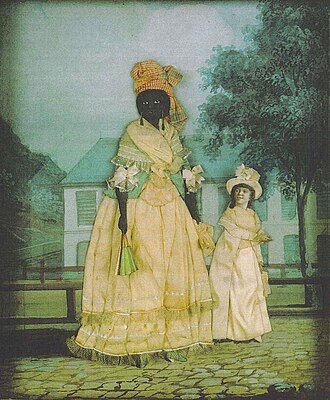
Founding of the First Free Black Community in New York

Following gradual abolition laws in New York, the first significant free Black community emerged in New York City, establishing churches, schools, and social organizations. Despite legal freedom, Black residents faced severe discrimination, including exclusion from public institutions and limited economic opportunities.

New York City, New York, NY
African American Education & schools Jim Crow Slavery & emancipation
Read more about this entry
Following gradual abolition laws in New York, the first significant free Black community emerged in New York City, establishing churches, schools, and social organizations. Despite legal freedom, Black residents faced severe discrimination, including exclusion from public institutions and limited economic opportunities.
1784
1784
institutional cultural legislation

Rhode Island's Slave Trade and Gradual Emancipation

Rhode Island merchants dominated the colonial slave trade even as the state passed gradual emancipation; that dual history of profit and partial freedom defines New England's entanglement with slavery.

Rhode Island, RI
Slavery & emancipation
Read more about this entry
Rhode Island merchants dominated the colonial slave trade even as the state passed gradual emancipation; that dual history of profit and partial freedom defines New England's entanglement with slavery.