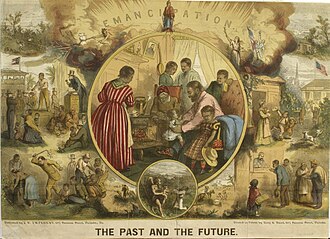
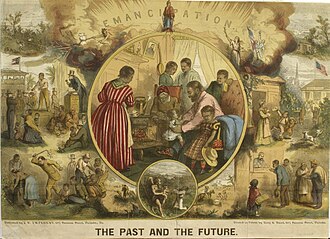
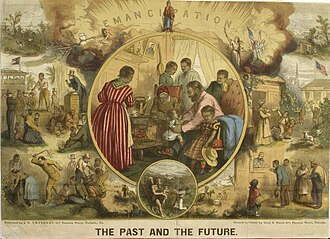
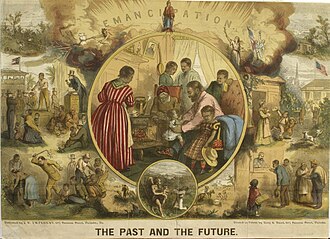
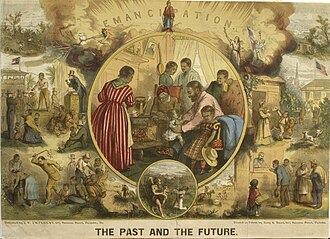
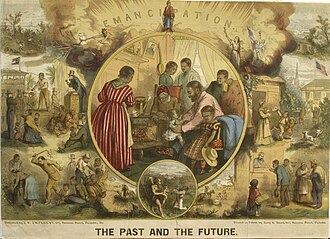
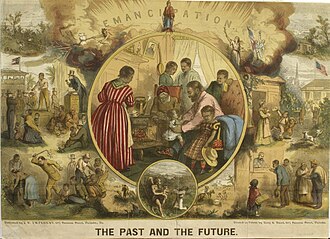
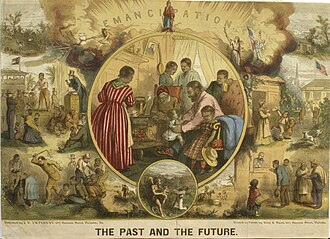
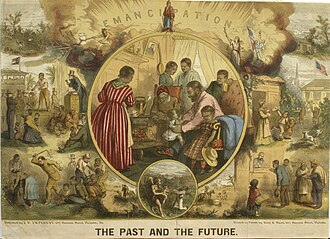
President Abraham Lincoln issued the Emancipation Proclamation on January 1, 1863, declaring that all enslaved people in Confederate states 'henceforth shall be free.' The proclamation fundamentally altered the Civil War's purpose by linking Union victory to emancipation and enabled Black men to …
📍Washington, DC, DC
👤African AmericanLaborSlavery & emancipation
Read more about this entry
President Abraham Lincoln issued the Emancipation Proclamation on January 1, 1863, declaring that all enslaved people in Confederate states 'henceforth shall be free.' The proclamation fundamentally altered the Civil War's purpose by linking Union victory to emancipation and enabled Black men to join the U.S. military.
President Abraham Lincoln signed the Emancipation Proclamation on January 1, 1863, declaring that all enslaved people in Confederate states 'henceforth shall be free.' The proclamation authorized the enlistment of Black troops and shifted the Civil War's focus to include the abolition of …
📍Washington, DC, DC
👤African AmericanLaborSlavery & emancipation
Read more about this entry
President Abraham Lincoln signed the Emancipation Proclamation on January 1, 1863, declaring that all enslaved people in Confederate states 'henceforth shall be free.' The proclamation authorized the enlistment of Black troops and shifted the Civil War's focus to include the abolition of slavery. It freed slaves only in states in rebellion, not in Union-held territories or states.
President Abraham Lincoln signed the Emancipation Proclamation on January 1, 1863, declaring that all enslaved people in Confederate states 'henceforth shall be free.' This executive order shifted the Civil War's purpose to include ending slavery and paved the way for the 13th …
📍Washington, D.C., DC
👤Slavery & emancipation
Read more about this entry
President Abraham Lincoln signed the Emancipation Proclamation on January 1, 1863, declaring that all enslaved people in Confederate states 'henceforth shall be free.' This executive order shifted the Civil War's purpose to include ending slavery and paved the way for the 13th Amendment.
President Abraham Lincoln issued the Emancipation Proclamation on January 1, 1863, declaring all enslaved people in Confederate states to be free. This executive order transformed the Civil War into a fight against slavery and paved the way for the 13th Amendment. It …
📍Washington, DC, DC
👤Slavery & emancipation
Read more about this entry
President Abraham Lincoln issued the Emancipation Proclamation on January 1, 1863, declaring all enslaved people in Confederate states to be free. This executive order transformed the Civil War into a fight against slavery and paved the way for the 13th Amendment. It marked the first major federal policy shift toward racial equality in the United States.
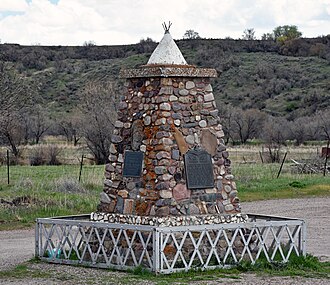
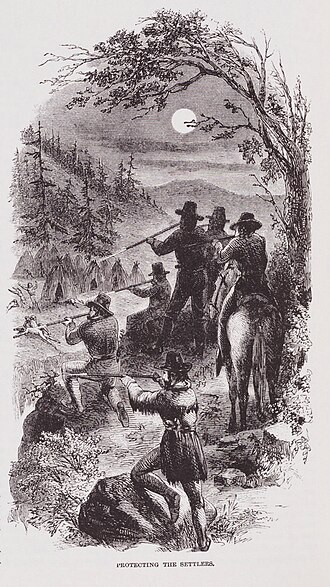
On January 29, 1863, the U.S. Army attacked a Shoshone encampment following years of violent clashes, killing over 200 Indigenous Americans. The attack occurred near Preston in what is now Idaho. This massacre was one of the largest killings of Native Americans …
📍Near Preston, Idaho, ID
👤IndigenousRacial violence
Read more about this entry
On January 29, 1863, the U.S. Army attacked a Shoshone encampment following years of violent clashes, killing over 200 Indigenous Americans. The attack occurred near Preston in what is now Idaho. This massacre was one of the largest killings of Native Americans by the U.S. military in the 19th century.
President Abraham Lincoln signed the Emancipation Proclamation on January 1, 1863, declaring that enslaved people in Confederate states 'henceforth shall be free.' This executive order shifted the Civil War's purpose to include the abolition of slavery and authorized the recruitment of Black …
📍Washington, DC, DC
👤African AmericanLaborSlavery & emancipation
Read more about this entry
President Abraham Lincoln signed the Emancipation Proclamation on January 1, 1863, declaring that enslaved people in Confederate states 'henceforth shall be free.' This executive order shifted the Civil War's purpose to include the abolition of slavery and authorized the recruitment of Black soldiers into the Union Army. It did not immediately free all enslaved people but set the legal and moral framework for total emancipation.
President Abraham Lincoln issued the Emancipation Proclamation, proclaiming freedom for enslaved African Americans in Confederate states. While it did not end slavery nationwide, it transformed the Civil War into a fight against slavery and paved the way for the 13th Amendment[4]. The …
📍Washington, D.C., DC
👤African AmericanSlavery & emancipation
Read more about this entry
President Abraham Lincoln issued the Emancipation Proclamation, proclaiming freedom for enslaved African Americans in Confederate states. While it did not end slavery nationwide, it transformed the Civil War into a fight against slavery and paved the way for the 13th Amendment[4]. The proclamation marked a pivotal shift in federal policy toward racial equality.
President Abraham Lincoln issued the Emancipation Proclamation on January 1, 1863, declaring all enslaved people in Confederate states to be free. This executive order transformed the Civil War into a fight against slavery and authorized the recruitment of Black soldiers into the …
📍Washington, DC, DC
👤African AmericanLaborSlavery & emancipation
Read more about this entry
President Abraham Lincoln issued the Emancipation Proclamation on January 1, 1863, declaring all enslaved people in Confederate states to be free. This executive order transformed the Civil War into a fight against slavery and authorized the recruitment of Black soldiers into the Union Army. It applied to approximately 3 million enslaved people in rebelling territories, though it did not immediately free those in Union-held areas.
President Abraham Lincoln issued the Emancipation Proclamation on January 1, 1863, declaring all enslaved people in Confederate-held territory to be free. While it did not immediately end slavery everywhere, it transformed the Civil War into a fight against slavery and enabled 178,000 …
📍Washington, DC, DC
👤African AmericanLaborSlavery & emancipation
Read more about this entry
President Abraham Lincoln issued the Emancipation Proclamation on January 1, 1863, declaring all enslaved people in Confederate-held territory to be free. While it did not immediately end slavery everywhere, it transformed the Civil War into a fight against slavery and enabled 178,000 African Americans to serve in the Union Army[9]. The proclamation was a landmark policy victory that shifted federal stance on racial equality during wartime[9].
President Abraham Lincoln issued the Emancipation Proclamation on January 1, 1863, declaring all enslaved people in Confederate states to be free. This executive order transformed the Civil War into a fight against slavery and authorized the recruitment of Black soldiers into the …
📍Washington, DC, DC
👤African AmericanLaborSlavery & emancipation
Read more about this entry
President Abraham Lincoln issued the Emancipation Proclamation on January 1, 1863, declaring all enslaved people in Confederate states to be free. This executive order transformed the Civil War into a fight against slavery and authorized the recruitment of Black soldiers into the Union Army. It did not immediately free all enslaved people but was a decisive moral and legal step toward total emancipation.
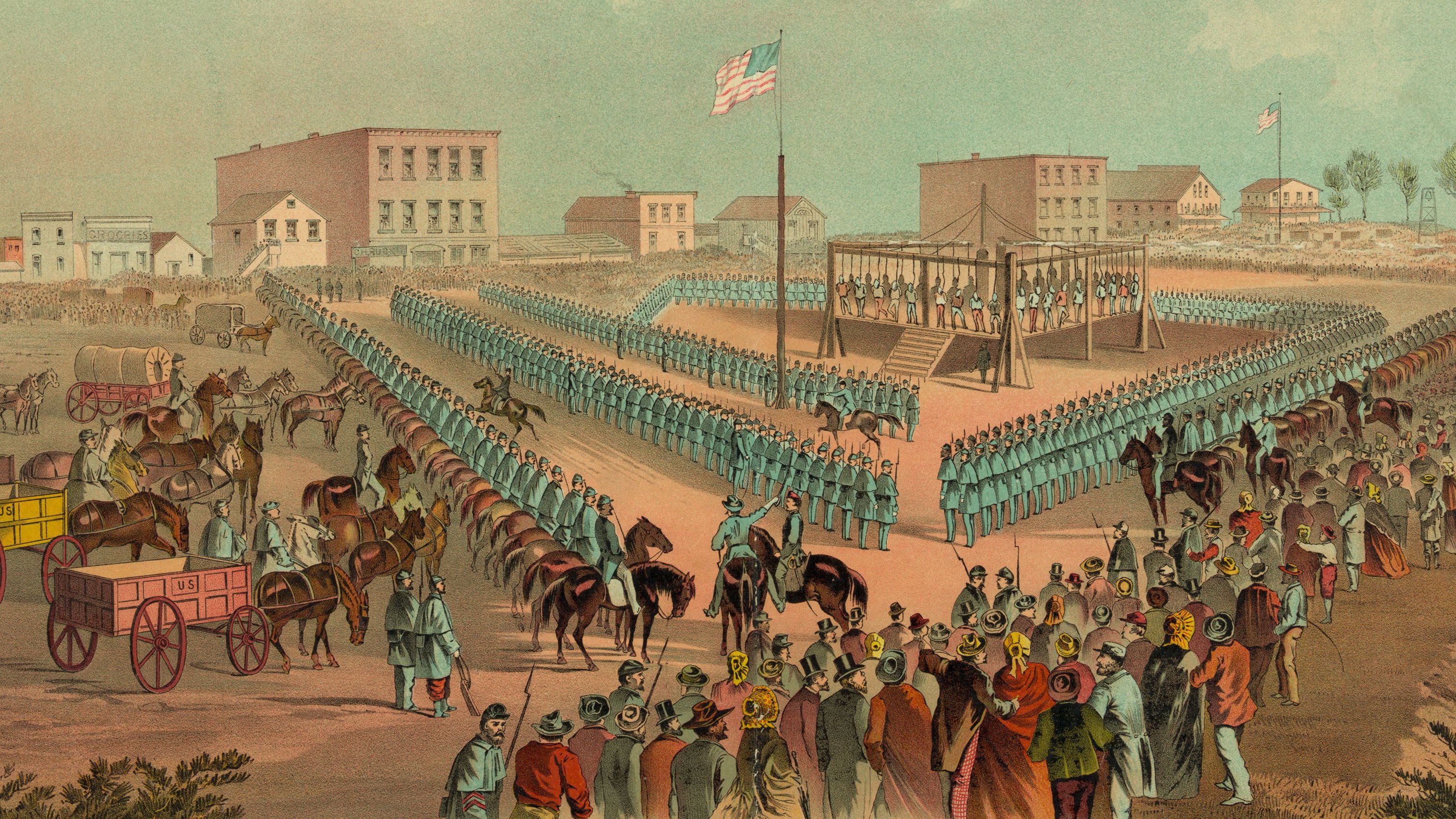
On December 26, 1862, 38 Dakota men were hanged in Mankato, Minnesota, following the U.S.-Dakota War. Authorized by President Abraham Lincoln, this event remains the single largest mass execution in U.S. history. Today, the site is commemorated by the Reconciliation Park in …
📍209 N Riverfront Dr Mankato MN, MN
👤IndigenousRacial violence
Read more about this entry
On December 26, 1862, 38 Dakota men were hanged in Mankato, Minnesota, following the U.S.-Dakota War. Authorized by President Abraham Lincoln, this event remains the single largest mass execution in U.S. history. Today, the site is commemorated by the Reconciliation Park in downtown Mankato.
Abraham Lincoln won the 1860 election on a platform of halting the expansion of slavery, which prompted immediate Southern responses[6]. Shortly after the election, slave states began seceding to form the Confederacy, with South Carolina being the first to secede in December …
📍Charleston, South Carolina, SC
👤Slavery & emancipation
Read more about this entry
Abraham Lincoln won the 1860 election on a platform of halting the expansion of slavery, which prompted immediate Southern responses[6]. Shortly after the election, slave states began seceding to form the Confederacy, with South Carolina being the first to secede in December 1860[6]. This chain of events directly led to the Civil War beginning when Confederate forces attacked Fort Sumter, marking the culmination of decades of conflict over slavery expansion.
Abraham Lincoln won the 1860 presidential election on a platform of halting the expansion of slavery, which directly triggered slave states to secede from the Union. The election result demonstrated growing Northern opposition to slavery expansion and convinced Southern states that their …
📍Washington, DC, US
👤LaborSlavery & emancipation
Read more about this entry
Abraham Lincoln won the 1860 presidential election on a platform of halting the expansion of slavery, which directly triggered slave states to secede from the Union. The election result demonstrated growing Northern opposition to slavery expansion and convinced Southern states that their political power was threatened. Shortly after Lincoln's election, Confederate forces attacked U.S. forces, beginning the Civil War.
Following Lincoln's election, seven Southern slave states seceded to form the Confederate States of America, dedicated to preserving slavery and racial hierarchy. The Confederacy established its constitution and government in Montgomery, Alabama, explicitly protecting slavery as a cornerstone of its economy and …
📍Montgomery, Alabama, AL
👤Slavery & emancipation
Read more about this entry
Following Lincoln's election, seven Southern slave states seceded to form the Confederate States of America, dedicated to preserving slavery and racial hierarchy. The Confederacy established its constitution and government in Montgomery, Alabama, explicitly protecting slavery as a cornerstone of its economy and society. This act of secession directly led to the Civil War's outbreak.
Abraham Lincoln won the 1860 presidential election on a platform of halting the expansion of slavery into new territories. His victory prompted slave states to secede from the Union, forming the Confederacy. The election marked a decisive turning point in the national …
📍Washington, D.C., DC
👤LaborSlavery & emancipation
Read more about this entry
Abraham Lincoln won the 1860 presidential election on a platform of halting the expansion of slavery into new territories. His victory prompted slave states to secede from the Union, forming the Confederacy. The election marked a decisive turning point in the national conflict over slavery, leading directly to the Civil War's outbreak.
Abolitionist John Brown led a raid on the federal arsenal at Harper's Ferry to incite a slave rebellion and seize weapons for enslaved people. The raid was quickly suppressed, and Brown was captured, tried, and executed. The event heightened sectional tensions, with …
📍Harper's Ferry, Virginia, VA
👤Racial violenceSlavery & emancipation
Read more about this entry
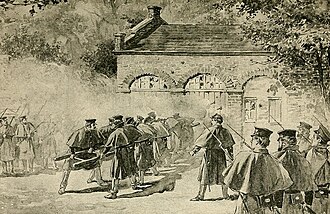
Abolitionist John Brown led a raid on the federal arsenal at Harper's Ferry to incite a slave rebellion and seize weapons for enslaved people. The raid was quickly suppressed, and Brown was captured, tried, and executed. The event heightened sectional tensions, with Southern states viewing it as evidence of Northern aggression, while abolitionists saw Brown as a martyr for freedom.
The U.S. Supreme Court ruled in Dred Scott v. Sandford that enslaved people were not citizens and could not sue in federal court, and that the Constitution protected slavery as property everywhere in the U.S. Territorially. Chief Justice Roger Taney declared that …
📍Washington, D.C., DC
👤African AmericanSlavery & emancipation
Read more about this entry
The U.S. Supreme Court ruled in Dred Scott v. Sandford that enslaved people were not citizens and could not sue in federal court, and that the Constitution protected slavery as property everywhere in the U.S. Territorially. Chief Justice Roger Taney declared that Black people had 'no rights which the white man was bound to respect.' The decision invalidated the Missouri Compromise and intensified national conflict over slavery.
The Kansas-Nebraska Act of 1854 allowed settlers in Kansas and Nebraska territories to decide through 'popular sovereignty' whether to permit slavery, sparking violent conflict known as 'Bleeding Kansas'[6]. Pro-slavery 'Border Ruffians' from Missouri crossed into Kansas to intimidate anti-slavery settlers and vote …
📍Kansas Territory, US
👤Racial violenceSlavery & emancipation
Read more about this entry
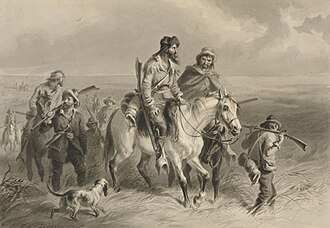
The Kansas-Nebraska Act of 1854 allowed settlers in Kansas and Nebraska territories to decide through 'popular sovereignty' whether to permit slavery, sparking violent conflict known as 'Bleeding Kansas'[6]. Pro-slavery 'Border Ruffians' from Missouri crossed into Kansas to intimidate anti-slavery settlers and vote illegally, leading to bloody fighting over slavery expansion in the Kansas Territory[6]. This conflict resulted in dozens of deaths and became a precursor to the Civil War, highlighting the violent resistance to halting slavery's expansion.
The Kansas-Nebraska Act repealed the Missouri Compromise, allowing slavery to expand into new territories through popular sovereignty. This led to violent conflict in Kansas Territory, known as 'Bleeding Kansas,' where pro-slavery and anti-slavery forces clashed. The act intensified national tensions over slavery …
📍Washington, D.C., DC
👤Slavery & emancipation
Read more about this entry
The Kansas-Nebraska Act repealed the Missouri Compromise, allowing slavery to expand into new territories through popular sovereignty. This led to violent conflict in Kansas Territory, known as 'Bleeding Kansas,' where pro-slavery and anti-slavery forces clashed. The act intensified national tensions over slavery expansion and contributed to the outbreak of the Civil War.
The Fugitive Slave Act of 1850 mandated that all citizens assist in capturing escaped slaves and denied Black people the right to testify in their own defense, leading to increased kidnappings of free Black people[1]. In Boston, abolitionists like William Lloyd Garrison …
The Fugitive Slave Act of 1850 mandated that all citizens assist in capturing escaped slaves and denied Black people the right to testify in their own defense, leading to increased kidnappings of free Black people[1]. In Boston, abolitionists like William Lloyd Garrison and Thomas Wentworth Higginson organized resistance, including the 1851 rescue of escaped slave George Baker, who was saved from federal agents[1]. The Act intensified conflicts between abolitionists and federal authorities, exemplifying the violent resistance to slavery in the North.
Bloody fighting broke out over slavery in the Kansas Territory, marking the beginning of the 'Bleeding Kansas' period of violent conflict between pro-slavery and anti-slavery forces. The newly rich, cotton-growing South threatened to secede from the Union as tensions over slavery expansion …
📍Kansas Territory, KS
👤LaborRacial violenceSlavery & emancipation
Read more about this entry
Bloody fighting broke out over slavery in the Kansas Territory, marking the beginning of the 'Bleeding Kansas' period of violent conflict between pro-slavery and anti-slavery forces. The newly rich, cotton-growing South threatened to secede from the Union as tensions over slavery expansion intensified. This territorial conflict became a precursor to the Civil War, demonstrating how slavery expansion would trigger national violence.
When California entered the Union as a free state in 1850, the practice of Indian indentured servitude was not outlawed until 1863. Under Mexican rule, Indians were subjected to de facto enslavement through a system of peonage by the white elite, formalizing …
📍California, CA
👤IndigenousLaborSlavery & emancipation
Read more about this entry
When California entered the Union as a free state in 1850, the practice of Indian indentured servitude was not outlawed until 1863. Under Mexican rule, Indians were subjected to de facto enslavement through a system of peonage by the white elite, formalizing the exploitation of Native Americans in the state.
Following the discovery of gold in 1848, hundreds of thousands of settlers flooded California, leading to systematic massacres of Indigenous peoples. State-sponsored militias and private vigilantes killed tens of thousands of Native Americans, with government funds allocated to support these campaigns. This …
📍Various locations across California, CA
👤IndigenousRacial violence
Read more about this entry
Following the discovery of gold in 1848, hundreds of thousands of settlers flooded California, leading to systematic massacres of Indigenous peoples. State-sponsored militias and private vigilantes killed tens of thousands of Native Americans, with government funds allocated to support these campaigns. This period represents one of the most devastating episodes of racial violence against Indigenous communities in U.S. history.
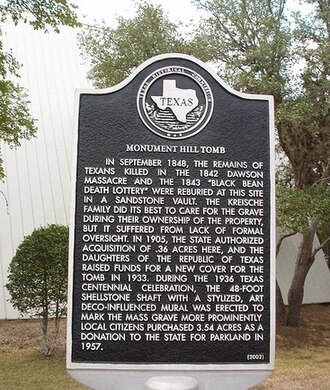
A white mob killed at least 15 Mexican Americans in Dawson, Texas, following a dispute over a stolen horse. The massacre was part of a broader pattern of racial violence against Latino communities in the Southwest during the mid-19th century.
📍Dawson, Texas, TX
👤LatinoRacial violence
Read more about this entry
A white mob killed at least 15 Mexican Americans in Dawson, Texas, following a dispute over a stolen horse. The massacre was part of a broader pattern of racial violence against Latino communities in the Southwest during the mid-19th century.