On June 30, 2026, the Equal Employment Opportunity Commission voted to rescind long-standing affirmative-action interpretive guidelines and related compliance manual provisions under Title VII. The EEOC described the materials as approximately 40 years old, removing key guidance on workplace affirmative action that …
📍Washington, DC, DC
👤Civil rights movement
Read more about this entry
On June 30, 2026, the Equal Employment Opportunity Commission voted to rescind long-standing affirmative-action interpretive guidelines and related compliance manual provisions under Title VII. The EEOC described the materials as approximately 40 years old, removing key guidance on workplace affirmative action that had supported civil rights enforcement for minority communities[1].
On June 30, 2026, the U.S. Supreme Court issued a 6-3 ruling in Louisiana v. Callais and Robinson v. Callais that dramatically curtailed minority voters' ability to challenge electoral maps under Section 2 of the Voting Rights Act. The decision limits the …
📍Washington, DC, DC
👤Voting rights
Read more about this entry
On June 30, 2026, the U.S. Supreme Court issued a 6-3 ruling in Louisiana v. Callais and Robinson v. Callais that dramatically curtailed minority voters' ability to challenge electoral maps under Section 2 of the Voting Rights Act. The decision limits the creation of majority-minority congressional districts, a key tool previously used to remedy voting discrimination in states.
The U.S. Supreme Court allowed law enforcement to use ethnicity and perceived national origin as factors to justify detaining individuals to determine immigration status. This decision weakened protections against racial profiling in immigration enforcement.
📍Washington, DC, DC
👤Policing
Read more about this entry
The U.S. Supreme Court allowed law enforcement to use ethnicity and perceived national origin as factors to justify detaining individuals to determine immigration status. This decision weakened protections against racial profiling in immigration enforcement.
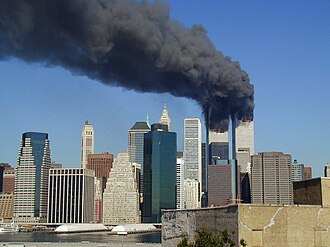
Following the September 11 attacks, the U.S. government implemented aggressive racial profiling targeting Muslim, Arab, and South Asian communities. Policies like the No-Fly List and enhanced surveillance led to widespread discrimination and civil rights violations.
📍Washington, DC, DC
👤Civil rights movement
Read more about this entry
Following the September 11 attacks, the U.S. government implemented aggressive racial profiling targeting Muslim, Arab, and South Asian communities. Policies like the No-Fly List and enhanced surveillance led to widespread discrimination and civil rights violations.
From 1981 to 1997, the USDA discriminated against tens of thousands of Black American farmers by denying loans provided to white farmers in similar circumstances [3]. This systemic discrimination was the subject of the *Pigford v. Glickman* lawsuit, which resulted in a …
📍Washington, DC, DC
👤African AmericanJim Crow
Read more about this entry
From 1981 to 1997, the USDA discriminated against tens of thousands of Black American farmers by denying loans provided to white farmers in similar circumstances [3]. This systemic discrimination was the subject of the *Pigford v. Glickman* lawsuit, which resulted in a $1.06 billion settlement agreement in 1999 for Black farmers [3]. The case represents a major, documented instance of federal agricultural policy racism against Black Americans.
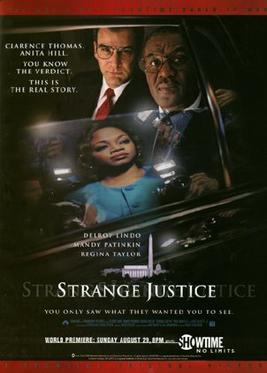
On October 15, 1991, the Senate confirmed Clarence Thomas to the U.S. Supreme Court following a contentious nomination process that included allegations of racial insensitivity and discrimination [9]. Thomas's confirmation, which came after a narrow 52-48 vote, was seen by many civil …
📍Washington, DC, DC
👤Civil rights movementVoting rights
Read more about this entry
On October 15, 1991, the Senate confirmed Clarence Thomas to the U.S. Supreme Court following a contentious nomination process that included allegations of racial insensitivity and discrimination [9]. Thomas's confirmation, which came after a narrow 52-48 vote, was seen by many civil rights leaders as a setback for racial justice, as he had previously opposed affirmative action and the Voting Rights Act [9]. His appointment altered the court's balance on racial issues for decades.
Congress passed Public Law 100-383, the Civil Liberties Act of 1988, which President Ronald Reagan signed to acknowledge the injustice of Japanese American internment and apologize for it [6][10]. The act provided a $20,000 cash payment to each person who was incarcerated, …
📍Washington, DC, DC
👤Incarceration & campsJapanese American
Read more about this entry
Congress passed Public Law 100-383, the Civil Liberties Act of 1988, which President Ronald Reagan signed to acknowledge the injustice of Japanese American internment and apologize for it [6][10]. The act provided a $20,000 cash payment to each person who was incarcerated, compensating more than 80,000 surviving survivors [6][10][14]. This legislation was based on a 1980 government review that found no evidence of military necessity and concluded the incarceration was a grave injustice fueled by racism [9][10].
Congress passed the Anti-Drug Abuse Act of 1986, establishing a 100:1 sentencing disparity between crack cocaine (disproportionately used by Black Americans) and powder cocaine (disproportionately used by white Americans) [3][9]. This legislation codified racial disparities in the federal penal system, mandating minimum …
📍Washington, DC, DC
👤African AmericanIncarceration & campsLatino
Read more about this entry
Congress passed the Anti-Drug Abuse Act of 1986, establishing a 100:1 sentencing disparity between crack cocaine (disproportionately used by Black Americans) and powder cocaine (disproportionately used by white Americans) [3][9]. This legislation codified racial disparities in the federal penal system, mandating minimum sentences that resulted in the mass incarceration of Black and Latino individuals. The act is widely cited by historians as a primary driver of the racial imbalances in the prison population.
The Anti-Drug Abuse Act of 1986 established mandatory minimum sentences of 5 years for possessing 5 grams of crack cocaine, compared to 10 years for 500 grams of powder cocaine. This 100:1 sentencing ratio disproportionately punished Black Americans, who were more likely …
📍Washington, DC, DC
👤African AmericanIncarceration & camps
Read more about this entry
The Anti-Drug Abuse Act of 1986 established mandatory minimum sentences of 5 years for possessing 5 grams of crack cocaine, compared to 10 years for 500 grams of powder cocaine. This 100:1 sentencing ratio disproportionately punished Black Americans, who were more likely to use crack due to lower cost. The law fueled massive increases in Black incarceration rates without evidence of greater harm from crack versus powder cocaine.
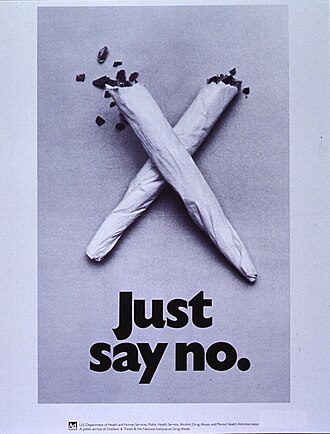
President Ronald Reagan officially announced his administration's War on Drugs in October 1982, continuing 'tough on crime' rhetoric that disproportionately targeted minority communities. This policy shift led to a massive increase in federal drug enforcement and prison populations, with Black and Latino …
📍Washington, DC, DC
👤African AmericanIncarceration & campsLatino
Read more about this entry
President Ronald Reagan officially announced his administration's War on Drugs in October 1982, continuing 'tough on crime' rhetoric that disproportionately targeted minority communities. This policy shift led to a massive increase in federal drug enforcement and prison populations, with Black and Latino communities facing significantly harsher penalties than white offenders for similar crimes [3]. The declaration set the stage for subsequent legislation that cemented racial disparities in the criminal justice system.
Passed in 1981, this law allowed the U.S. military to provide local, state, and federal police access to military bases, weapons, intelligence, and research for drug intervention efforts. The act marked a significant expansion of military involvement in domestic law enforcement under …
📍Washington, DC, DC
👤Policing
Read more about this entry
Passed in 1981, this law allowed the U.S. military to provide local, state, and federal police access to military bases, weapons, intelligence, and research for drug intervention efforts. The act marked a significant expansion of military involvement in domestic law enforcement under the War on Drugs framework. It facilitated increased militarization of police agencies targeting minority communities disproportionately.
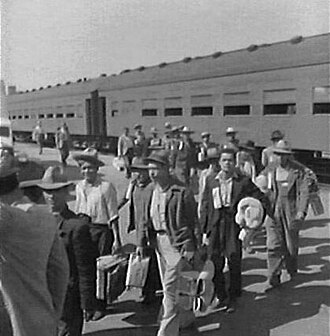
Congress ended the Bracero Program on December 31, 1964, after 22 years of operation that brought over four million migrants to work in U.S. agriculture and railroads[1][3]. The program was terminated due to factors including farm mechanization, evidence that Braceros reduced wages …
📍Washington, DC, DC
👤Labor
Read more about this entry
Congress ended the Bracero Program on December 31, 1964, after 22 years of operation that brought over four million migrants to work in U.S. agriculture and railroads[1][3]. The program was terminated due to factors including farm mechanization, evidence that Braceros reduced wages for U.S. farm workers, and political agreements to end labor competition[1][7]. Despite government guarantees of protection, many workers suffered from forced savings schemes where up to 10 percent of wages were withheld and often disappeared[8].
The Supreme Court unanimously ruled that states could not nullify or disobey federal court decisions on racial segregation, specifically rejecting Arkansas's attempt to delay desegregation. The Court declared that 'no state law or governor can supersede' federal judicial authority on constitutional rights. …
📍Washington, DC, DC
👤Education & schoolsJim Crow
Read more about this entry
The Supreme Court unanimously ruled that states could not nullify or disobey federal court decisions on racial segregation, specifically rejecting Arkansas's attempt to delay desegregation. The Court declared that 'no state law or governor can supersede' federal judicial authority on constitutional rights. This decision reinforced the binding nature of Brown v. Board and prevented Southern states from evading desegregation.
The Supreme Court ruled that segregation in graduate education violated the Equal Protection Clause of the Fourteenth Amendment. The case involved H. McLaurin, an African American denied admission to the University of Oklahoma's graduate program. This decision further undermined the 'separate but …
📍Washington, DC, DC
👤African AmericanEducation & schoolsJim Crow
Read more about this entry
The Supreme Court ruled that segregation in graduate education violated the Equal Protection Clause of the Fourteenth Amendment. The case involved H. McLaurin, an African American denied admission to the University of Oklahoma's graduate program. This decision further undermined the 'separate but equal' doctrine and preceded Brown v. Board of Education.
Congress passed the Japanese-American Claims Act of 1948, signed by President Harry Truman, providing partial financial compensation for lost property to Japanese Americans incarcerated during World War II [2][3]. The act allowed internees to submit claims for property losses, though the total …
📍Washington, DC, DC
👤Incarceration & campsJapanese American
Read more about this entry
Congress passed the Japanese-American Claims Act of 1948, signed by President Harry Truman, providing partial financial compensation for lost property to Japanese Americans incarcerated during World War II [2][3]. The act allowed internees to submit claims for property losses, though the total compensation of $38 million was far less than the estimated $400 million in losses [3]. This was the first federal acknowledgment of the injustice of the incarceration and a step toward reparations [2][3].
On December 17, 1944, the Roosevelt administration rescinded the exclusion orders that had mandated Japanese American removal from the West Coast. Nine of the ten incarceration camps were shut down by the end of 1945. This marked the official end of the …
On December 17, 1944, the Roosevelt administration rescinded the exclusion orders that had mandated Japanese American removal from the West Coast. Nine of the ten incarceration camps were shut down by the end of 1945. This marked the official end of the forced removal policy, though many Japanese Americans faced barriers returning to their homes.
The Supreme Court ruled that the "White primary," which excluded Black people from voting in Democratic Party primaries, was unconstitutional[3]. This decision struck down Texas' all-white primary system, a key mechanism of disenfranchisement in the South[3]. It marked a critical step toward …
📍Washington, DC, DC
👤African AmericanVoting rights
Read more about this entry
The Supreme Court ruled that the "White primary," which excluded Black people from voting in Democratic Party primaries, was unconstitutional[3]. This decision struck down Texas' all-white primary system, a key mechanism of disenfranchisement in the South[3]. It marked a critical step toward ending systemic voting barriers predating the 1965 Voting Rights Act[3].
The Bracero Program was initiated in 1942 through agreements between the U.S. and Mexican governments to allow temporary laborers from Mexico to work legally in the United States during World War II[4]. The program guaranteed workers minimum wages, housing, and protection from …
📍Washington, DC, DC
👤Housing & redlining
Read more about this entry
The Bracero Program was initiated in 1942 through agreements between the U.S. and Mexican governments to allow temporary laborers from Mexico to work legally in the United States during World War II[4]. The program guaranteed workers minimum wages, housing, and protection from discrimination, though many faced wage theft, racial discrimination, and abuse by agricultural corporations[2][5]. Over its 22-year duration, more than 4.5 million Mexican workers arrived, primarily for agricultural and railroad work in Texas and California[1][4].
President Woodrow Wilson institutionalized segregation in the federal civil service, reversing earlier Reconstruction-era efforts to integrate federal workplaces. By the end of World War I, the District of Columbia was thoroughly segregated, including federal buildings and services. This policy marked a significant …
📍Washington, DC, DC
👤African AmericanJim Crow
Read more about this entry
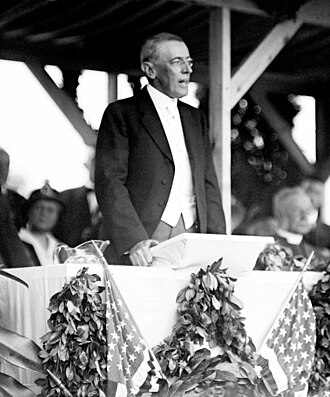
President Woodrow Wilson institutionalized segregation in the federal civil service, reversing earlier Reconstruction-era efforts to integrate federal workplaces. By the end of World War I, the District of Columbia was thoroughly segregated, including federal buildings and services. This policy marked a significant federal endorsement of racial discrimination and undermined Black civil servants' rights.
The Dawes Act (1887) authorized the breakup of tribal lands into individual allotments, leading to the loss of over 90 million acres of Native land by 1934 [7]. By the 1890s, the policy was actively enforced, dismantling communal land ownership and forcing …
📍Washington, DC, DC
👤IndigenousLand & treaties
Read more about this entry
The Dawes Act (1887) authorized the breakup of tribal lands into individual allotments, leading to the loss of over 90 million acres of Native land by 1934 [7]. By the 1890s, the policy was actively enforced, dismantling communal land ownership and forcing assimilation [7].
Following the disputed 1876 presidential election, a political bargain known as the Compromise of 1877 awarded the presidency to Rutherford B. Hayes in exchange for withdrawing all remaining federal troops from the South. This ended military enforcement of Reconstruction policies and allowed …
📍Washington, DC, DC
👤African AmericanCivil rights movementJim Crow
Read more about this entry
Following the disputed 1876 presidential election, a political bargain known as the Compromise of 1877 awarded the presidency to Rutherford B. Hayes in exchange for withdrawing all remaining federal troops from the South. This ended military enforcement of Reconstruction policies and allowed Southern states to establish Jim Crow laws without federal interference. The withdrawal marked the effective end of federal protection for Black civil rights.
The Senate passed a resolution creating the Select Committee to Investigate Alleged Outrages in the Southern States to document Ku Klux Klan atrocities. Supported by President Ulysses S. Grant, this investigation compiled critical evidence of Klan violence and helped justify new laws …
📍Washington, DC, DC
👤Civil rights movement
Read more about this entry
The Senate passed a resolution creating the Select Committee to Investigate Alleged Outrages in the Southern States to document Ku Klux Klan atrocities. Supported by President Ulysses S. Grant, this investigation compiled critical evidence of Klan violence and helped justify new laws to protect American rights. The inquiry prompted the formation of the U.S. Department of Justice and spurred mass prosecutions of individual KKK members.
Congress passed three Enforcement Acts between 1870 and 1871 to protect Black voters, officeholders, and jurors under the Fourteenth and Fifteenth Amendments. These laws criminalized voter intimidation, authorized federal intervention when states failed to protect rights, and created federal oversight of elections. …
📍Washington, DC, DC
👤African AmericanVoting rights
Read more about this entry
Congress passed three Enforcement Acts between 1870 and 1871 to protect Black voters, officeholders, and jurors under the Fourteenth and Fifteenth Amendments. These laws criminalized voter intimidation, authorized federal intervention when states failed to protect rights, and created federal oversight of elections. They were the first comprehensive federal efforts to secure Black political participation in the South.
Ratified on July 9, 1868, the Fourteenth Amendment extended U.S. citizenship to all natural-born residents, including formerly enslaved African Americans, and guaranteed due process and equal protection under the law. It temporarily barred former Confederates from holding public office and became the …
📍Washington, DC, DC
👤African AmericanCivil rights movementSlavery & emancipation
Read more about this entry
Ratified on July 9, 1868, the Fourteenth Amendment extended U.S. citizenship to all natural-born residents, including formerly enslaved African Americans, and guaranteed due process and equal protection under the law. It temporarily barred former Confederates from holding public office and became the basis for countless civil rights rulings. The amendment remains the primary constitutional tool for challenging racial discrimination.