President Richard Nixon established the Minority Business Development Agency (MBDA) to fund and support minority-run businesses, promoting 'Black Capitalism' as a policy response to economic inequality. The agency aimed to address the limited impact of previous affirmative action and government assistance to …
📍Washington, D.C., DC
👤African AmericanCivil rights movement
Read more about this entry
President Richard Nixon established the Minority Business Development Agency (MBDA) to fund and support minority-run businesses, promoting 'Black Capitalism' as a policy response to economic inequality. The agency aimed to address the limited impact of previous affirmative action and government assistance to Black-owned enterprises[2]. This policy reflected a shift toward economic empowerment within the Nixon administration's approach to civil rights[2].
Signed by President Lyndon B. Johnson, this act prohibited racial discrimination in the sale, rental, and financing of most housing units nationwide. It was the first federal law to explicitly address housing discrimination and aimed to dismantle de jure and de facto …
📍Washington, D.C., US
👤Housing & redliningJim Crow
Read more about this entry
Signed by President Lyndon B. Johnson, this act prohibited racial discrimination in the sale, rental, and financing of most housing units nationwide. It was the first federal law to explicitly address housing discrimination and aimed to dismantle de jure and de facto segregation in residential areas. The act was passed in the aftermath of Martin Luther King Jr.'s assassination.
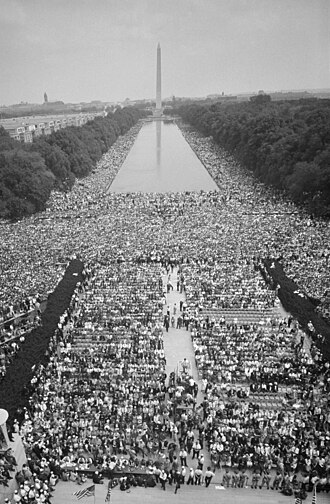
On August 28, 1963, over 250,000 people gathered in Washington, D.C. for the March on Washington, where Martin Luther King Jr. delivered his iconic 'I Have a Dream' speech[2]. The event helped galvanize public support for the Civil Rights Act of 1964 …
📍Washington, D.C., DC
👤Civil rights movementVoting rights
Read more about this entry
On August 28, 1963, over 250,000 people gathered in Washington, D.C. for the March on Washington, where Martin Luther King Jr. delivered his iconic 'I Have a Dream' speech[2]. The event helped galvanize public support for the Civil Rights Act of 1964 and the Voting Rights Act of 1965[5].
On the same day as Brown v. Board, the Supreme Court ruled that racial segregation in District of Columbia public schools violated the Due Process Clause of the Fifth Amendment[3][10]. The Court held that segregated schools in the capital were inherently unequal, …
📍Washington, D.C., DC
👤Education & schoolsJim Crow
Read more about this entry
On the same day as Brown v. Board, the Supreme Court ruled that racial segregation in District of Columbia public schools violated the Due Process Clause of the Fifth Amendment[3][10]. The Court held that segregated schools in the capital were inherently unequal, incorporating Equal Protection principles against the federal government[3]. This decision ended school segregation in the nation's capital[10].
While not a single court case name, the period saw the Home Owners' Loan Corporation (HOLC) and Federal Housing Administration (FHA) systematically embed redlining into national policy through 'Security Maps' that rated Black neighborhoods as hazardous. This policy denied mortgage insurance and …
📍Washington, D.C., DC
👤African AmericanHousing & redliningJim CrowLabor
Read more about this entry
While not a single court case name, the period saw the Home Owners' Loan Corporation (HOLC) and Federal Housing Administration (FHA) systematically embed redlining into national policy through 'Security Maps' that rated Black neighborhoods as hazardous. This policy denied mortgage insurance and credit to Black families, enforcing residential segregation across the North and Midwest. The practice was institutionalized under New Deal-era housing programs.
The U.S. Congress extended the Chinese Exclusion Act indefinitely and added new restrictions on Chinese immigrants, including mandatory registration and denial of naturalization. This legislative action entrenched racial exclusion in federal immigration policy. It marked the formalization of anti-Asian racism in national …
📍Washington, D.C., US
👤Asian American
Read more about this entry
The U.S. Congress extended the Chinese Exclusion Act indefinitely and added new restrictions on Chinese immigrants, including mandatory registration and denial of naturalization. This legislative action entrenched racial exclusion in federal immigration policy. It marked the formalization of anti-Asian racism in national law.
The Dawes Act (Indian Appropriations Act of 1887) authorized the federal government to divide Native American tribal lands into individual allotments, breaking up communal land ownership. This policy aimed to assimilate Indigenous peoples by forcing them into private farming and undermining tribal …
📍Washington, D.C., DC
👤IndigenousLand & treaties
Read more about this entry
The Dawes Act (Indian Appropriations Act of 1887) authorized the federal government to divide Native American tribal lands into individual allotments, breaking up communal land ownership. This policy aimed to assimilate Indigenous peoples by forcing them into private farming and undermining tribal sovereignty. Millions of acres of Native land were subsequently sold to non-Native settlers.
In a group of five cases, the Supreme Court held that the Thirteenth and Fourteenth Amendments did not empower Congress to outlaw racial discrimination by private individuals[8]. The Court ruled that the Fourteenth Amendment only prohibited state-sponsored denial of equal protection, not …
📍Washington, D.C., DC
👤African AmericanCivil rights movement
Read more about this entry
In a group of five cases, the Supreme Court held that the Thirteenth and Fourteenth Amendments did not empower Congress to outlaw racial discrimination by private individuals[8]. The Court ruled that the Fourteenth Amendment only prohibited state-sponsored denial of equal protection, not private acts of racism[8]. This decision effectively nullified the Civil Rights Act of 1875 and left Black Americans unprotected from private discrimination for decades[8].
The 13th Amendment to the U.S. Constitution, ratified December 6, 1865, abolished slavery and involuntary servitude, except as punishment for a crime. It overturned the Dred Scott decision and the Three-Fifths Clause, granting formal legal freedom to over 4 million enslaved Black …
The 13th Amendment to the U.S. Constitution, ratified December 6, 1865, abolished slavery and involuntary servitude, except as punishment for a crime. It overturned the Dred Scott decision and the Three-Fifths Clause, granting formal legal freedom to over 4 million enslaved Black people. The 'except... punishment' clause later enabled convict leasing and prison labor systems that disproportionately targeted Black Americans.
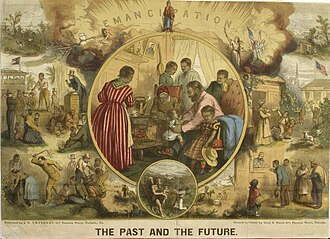
President Abraham Lincoln signed the Emancipation Proclamation on January 1, 1863, declaring that all enslaved people in Confederate states 'henceforth shall be free.' This executive order shifted the Civil War's purpose to include ending slavery and paved the way for the 13th …
📍Washington, D.C., DC
👤Slavery & emancipation
Read more about this entry
President Abraham Lincoln signed the Emancipation Proclamation on January 1, 1863, declaring that all enslaved people in Confederate states 'henceforth shall be free.' This executive order shifted the Civil War's purpose to include ending slavery and paved the way for the 13th Amendment.
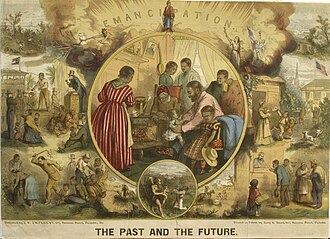
President Abraham Lincoln issued the Emancipation Proclamation, proclaiming freedom for enslaved African Americans in Confederate states. While it did not end slavery nationwide, it transformed the Civil War into a fight against slavery and paved the way for the 13th Amendment[4]. The …
📍Washington, D.C., DC
👤African AmericanSlavery & emancipation
Read more about this entry
President Abraham Lincoln issued the Emancipation Proclamation, proclaiming freedom for enslaved African Americans in Confederate states. While it did not end slavery nationwide, it transformed the Civil War into a fight against slavery and paved the way for the 13th Amendment[4]. The proclamation marked a pivotal shift in federal policy toward racial equality.
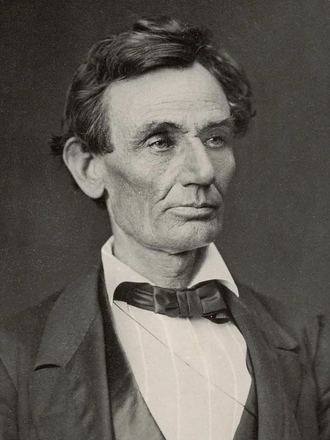
Abraham Lincoln won the 1860 presidential election on a platform of halting the expansion of slavery into new territories. His victory prompted slave states to secede from the Union, forming the Confederacy. The election marked a decisive turning point in the national …
📍Washington, D.C., DC
👤LaborSlavery & emancipation
Read more about this entry
Abraham Lincoln won the 1860 presidential election on a platform of halting the expansion of slavery into new territories. His victory prompted slave states to secede from the Union, forming the Confederacy. The election marked a decisive turning point in the national conflict over slavery, leading directly to the Civil War's outbreak.
The U.S. Supreme Court ruled in Dred Scott v. Sandford that enslaved people were not citizens and could not sue in federal court, and that the Constitution protected slavery as property everywhere in the U.S. Territorially. Chief Justice Roger Taney declared that …
📍Washington, D.C., DC
👤African AmericanSlavery & emancipation
Read more about this entry
The U.S. Supreme Court ruled in Dred Scott v. Sandford that enslaved people were not citizens and could not sue in federal court, and that the Constitution protected slavery as property everywhere in the U.S. Territorially. Chief Justice Roger Taney declared that Black people had 'no rights which the white man was bound to respect.' The decision invalidated the Missouri Compromise and intensified national conflict over slavery.
The Kansas-Nebraska Act repealed the Missouri Compromise, allowing slavery to expand into new territories through popular sovereignty. This led to violent conflict in Kansas Territory, known as 'Bleeding Kansas,' where pro-slavery and anti-slavery forces clashed. The act intensified national tensions over slavery …
📍Washington, D.C., DC
👤Slavery & emancipation
Read more about this entry
The Kansas-Nebraska Act repealed the Missouri Compromise, allowing slavery to expand into new territories through popular sovereignty. This led to violent conflict in Kansas Territory, known as 'Bleeding Kansas,' where pro-slavery and anti-slavery forces clashed. The act intensified national tensions over slavery expansion and contributed to the outbreak of the Civil War.
The U.S. Supreme Court ruled in United States v. The Amistad that the African captives aboard the schooner were free individuals with the right to resist unlawful slavery. The decision affirmed their status as free people rather than property, recognizing their right …
📍Washington, D.C., DC
👤Slavery & emancipation
Read more about this entry
The U.S. Supreme Court ruled in United States v. The Amistad that the African captives aboard the schooner were free individuals with the right to resist unlawful slavery. The decision affirmed their status as free people rather than property, recognizing their right to self-defense against enslavement. This landmark case provided legal precedent for resistance against slavery.
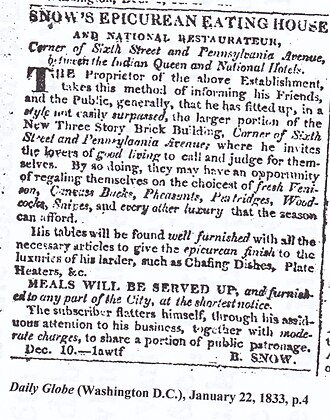
In August 1835, a white mob targeted Black residents and abolitionists in Washington, D.C., destroying businesses and homes in the Snow Riot[1]. The riot was sparked by racial tensions and anti-abolitionist sentiment[1]. It resulted in the displacement of many Black residents and …
In August 1835, a white mob targeted Black residents and abolitionists in Washington, D.C., destroying businesses and homes in the Snow Riot[1]. The riot was sparked by racial tensions and anti-abolitionist sentiment[1]. It resulted in the displacement of many Black residents and the destruction of Black-owned properties[1].
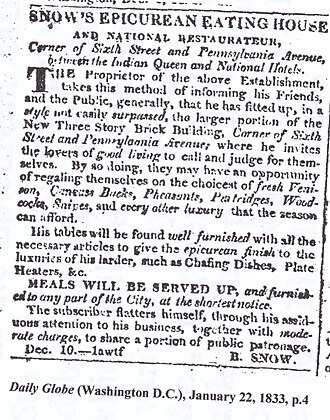
In August 1835, a white mob targeted Black businesses and residents in Washington, D.C., destroying the business of Henry Snow, a Black barber, and attacking other Black establishments. The riot lasted several days and was part of numerous anti-Black riots throughout 1835[1]. …
In August 1835, a white mob targeted Black businesses and residents in Washington, D.C., destroying the business of Henry Snow, a Black barber, and attacking other Black establishments. The riot lasted several days and was part of numerous anti-Black riots throughout 1835[1]. The violence reflected growing tensions over abolition and Black economic success[1].
In Johnson v. McIntosh, the Supreme Court ruled that Native tribes held only 'occupancy rights' to land, not full title, and that the U.S. government acquired ultimate ownership through discovery and conquest. The decision established the 'doctrine of discovery' as federal common …
📍Washington, D.C., DC
👤IndigenousLand & treaties
Read more about this entry
In Johnson v. McIntosh, the Supreme Court ruled that Native tribes held only 'occupancy rights' to land, not full title, and that the U.S. government acquired ultimate ownership through discovery and conquest. The decision established the 'doctrine of discovery' as federal common law, denying Indigenous nations sovereignty over their ancestral territories. It remains a foundational precedent in federal Indian law that continues to affect land claims and tribal rights.