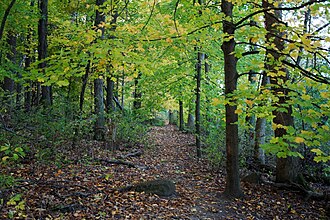
The University of Wisconsin-Madison was found to have systematically discriminated against Black students and faculty through inadequate funding, limited recruitment, and hostile campus environments. A federal investigation revealed the university failed to meet affirmative action commitments made in the 1970s. The settlement …
📍Madison, WI, WI
👤African AmericanEducation & schoolsJim Crow
Read more about this entry
The University of Wisconsin-Madison was found to have systematically discriminated against Black students and faculty through inadequate funding, limited recruitment, and hostile campus environments. A federal investigation revealed the university failed to meet affirmative action commitments made in the 1970s. The settlement required the university to implement comprehensive diversity reforms and establish oversight mechanisms.
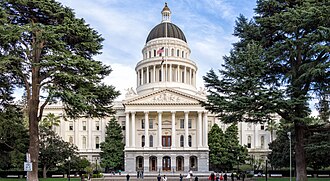
California passed the Racial Justice Act, which allowed defendants to challenge criminal convictions based on evidence of racial discrimination in jury selection, policing, or sentencing. The law was a response to documented disparities in the state's criminal justice system, particularly in drug …
📍Sacramento, CA, CA
👤Policing
Read more about this entry
California passed the Racial Justice Act, which allowed defendants to challenge criminal convictions based on evidence of racial discrimination in jury selection, policing, or sentencing. The law was a response to documented disparities in the state's criminal justice system, particularly in drug enforcement and police brutality cases. It provided a legal mechanism for addressing systemic racism in court proceedings.
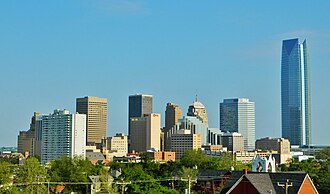
While the Oklahoma City bombing killed 168 people including 19 children, the subsequent investigation revealed that white supremacist Timothy McVeigh targeted the building for its association with Black and Latino communities. The bombing exemplified domestic terrorism driven by racial hatred and anti-government …
📍Oklahoma City, OK, OK
👤African AmericanLatinoRacial violence
Read more about this entry
While the Oklahoma City bombing killed 168 people including 19 children, the subsequent investigation revealed that white supremacist Timothy McVeigh targeted the building for its association with Black and Latino communities. The bombing exemplified domestic terrorism driven by racial hatred and anti-government extremism. The event intensified national debates about white supremacy and the need for hate crime legislation.
The Supreme Court held that all race-based discrimination, including affirmative action favoring minorities, must pass strict judicial scrutiny[3]. The Court ruled that federal contracting programs giving preference to minority-owned businesses required the same rigorous review as programs disadvantaging minorities[3]. This decision established …
📍Denver, Colorado, CO
👤Jim Crow
Read more about this entry
The Supreme Court held that all race-based discrimination, including affirmative action favoring minorities, must pass strict judicial scrutiny[3]. The Court ruled that federal contracting programs giving preference to minority-owned businesses required the same rigorous review as programs disadvantaging minorities[3]. This decision established that the Equal Protection Clause applies equally to racial preferences for and against any group[3].
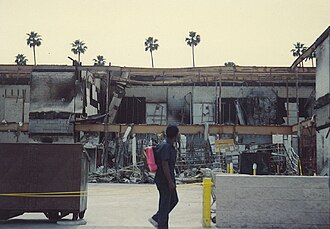
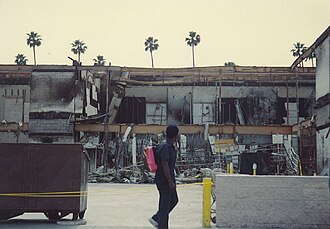
Following the grand jury's decision not to indict officers who beat Rodney King, Los Angeles erupted in six days of riots involving over 11,000 people. The uprising resulted in 53 deaths, over 2,000 injuries, and $1 billion in property damage. The riots …
📍Los Angeles, CA, CA
👤African AmericanLatinoPolicingRacial violence
Read more about this entry
Following the grand jury's decision not to indict officers who beat Rodney King, Los Angeles erupted in six days of riots involving over 11,000 people. The uprising resulted in 53 deaths, over 2,000 injuries, and $1 billion in property damage. The riots were primarily driven by Black and Latino communities frustrated by systemic police brutality and racial discrimination in the city.
Latino and Black officers brutally beat Rodney King, a Black man, after a high-speed chase, with the incident captured on video by a bystander. The video showed King receiving over 50 kicks and baton strikes while officers repeatedly shouted racial slurs. A …
Latino and Black officers brutally beat Rodney King, a Black man, after a high-speed chase, with the incident captured on video by a bystander. The video showed King receiving over 50 kicks and baton strikes while officers repeatedly shouted racial slurs. A white-dominated grand jury initially declined to indict the officers, sparking the 1992 Los Angeles riots and becoming a defining moment in the struggle against police brutality.
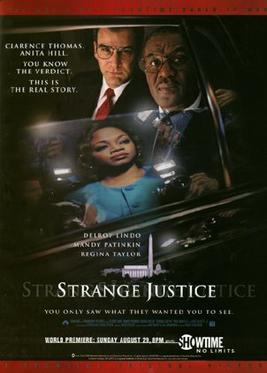
On October 15, 1991, the Senate confirmed Clarence Thomas to the U.S. Supreme Court following a contentious nomination process that included allegations of racial insensitivity and discrimination [9]. Thomas's confirmation, which came after a narrow 52-48 vote, was seen by many civil …
📍Washington, DC, DC
👤Civil rights movementVoting rights
Read more about this entry
On October 15, 1991, the Senate confirmed Clarence Thomas to the U.S. Supreme Court following a contentious nomination process that included allegations of racial insensitivity and discrimination [9]. Thomas's confirmation, which came after a narrow 52-48 vote, was seen by many civil rights leaders as a setback for racial justice, as he had previously opposed affirmative action and the Voting Rights Act [9]. His appointment altered the court's balance on racial issues for decades.
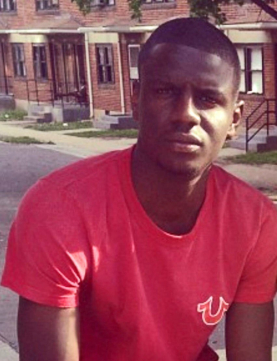
Freddie Gray, a Black man, was severely beaten by Baltimore police officers after a high-speed chase, resulting in permanent brain damage and death years later. The case became one of the earliest high-profile instances of police brutality against Black Americans that sparked …
📍Baltimore, MD, MD
👤African AmericanPolicingRacial violence
Read more about this entry
Freddie Gray, a Black man, was severely beaten by Baltimore police officers after a high-speed chase, resulting in permanent brain damage and death years later. The case became one of the earliest high-profile instances of police brutality against Black Americans that sparked national outcry and demands for accountability. It highlighted systemic patterns of excessive force in urban police departments targeting minority communities.
The Supreme Court held that racial preferences are subject to the strictest form of judicial scrutiny, known as 'strict scrutiny'[2]. The Court ruled that a Richmond city ordinance requiring 30% of construction contracts to go to minority-owned businesses was unconstitutional because it …
📍Richmond, Virginia, VA
👤Jim Crow
Read more about this entry
The Supreme Court held that racial preferences are subject to the strictest form of judicial scrutiny, known as 'strict scrutiny'[2]. The Court ruled that a Richmond city ordinance requiring 30% of construction contracts to go to minority-owned businesses was unconstitutional because it lacked a sufficient justification[2]. This decision significantly limited the use of racial preferences in government contracting and set a high bar for affirmative action programs[2].
Congress passed Public Law 100-383, the Civil Liberties Act of 1988, which President Ronald Reagan signed to acknowledge the injustice of Japanese American internment and apologize for it [6][10]. The act provided a $20,000 cash payment to each person who was incarcerated, …
📍Washington, DC, DC
👤Incarceration & campsJapanese American
Read more about this entry
Congress passed Public Law 100-383, the Civil Liberties Act of 1988, which President Ronald Reagan signed to acknowledge the injustice of Japanese American internment and apologize for it [6][10]. The act provided a $20,000 cash payment to each person who was incarcerated, compensating more than 80,000 surviving survivors [6][10][14]. This legislation was based on a 1980 government review that found no evidence of military necessity and concluded the incarceration was a grave injustice fueled by racism [9][10].
The Supreme Court rejected McCleskey's claim that his death sentence was the product of racial discrimination, despite statistical evidence showing Black defendants were more likely to receive death sentences when the victim was white. The Court held that demonstrating systemic racial bias …
📍Atlanta, Georgia, GA
👤African AmericanJim Crow
Read more about this entry
The Supreme Court rejected McCleskey's claim that his death sentence was the product of racial discrimination, despite statistical evidence showing Black defendants were more likely to receive death sentences when the victim was white. The Court held that demonstrating systemic racial bias in sentencing did not constitutionally invalidate an individual's sentence[4]. This decision limited judicial review of racial bias in criminal sentencing[4].
Congress passed the Anti-Drug Abuse Act of 1986, establishing a 100:1 sentencing disparity between crack cocaine (disproportionately used by Black Americans) and powder cocaine (disproportionately used by white Americans) [3][9]. This legislation codified racial disparities in the federal penal system, mandating minimum …
📍Washington, DC, DC
👤African AmericanIncarceration & campsLatino
Read more about this entry
Congress passed the Anti-Drug Abuse Act of 1986, establishing a 100:1 sentencing disparity between crack cocaine (disproportionately used by Black Americans) and powder cocaine (disproportionately used by white Americans) [3][9]. This legislation codified racial disparities in the federal penal system, mandating minimum sentences that resulted in the mass incarceration of Black and Latino individuals. The act is widely cited by historians as a primary driver of the racial imbalances in the prison population.
The Anti-Drug Abuse Act of 1986 established mandatory minimum sentences of 5 years for possessing 5 grams of crack cocaine, compared to 10 years for 500 grams of powder cocaine. This 100:1 sentencing ratio disproportionately punished Black Americans, who were more likely …
📍Washington, DC, DC
👤African AmericanIncarceration & camps
Read more about this entry
The Anti-Drug Abuse Act of 1986 established mandatory minimum sentences of 5 years for possessing 5 grams of crack cocaine, compared to 10 years for 500 grams of powder cocaine. This 100:1 sentencing ratio disproportionately punished Black Americans, who were more likely to use crack due to lower cost. The law fueled massive increases in Black incarceration rates without evidence of greater harm from crack versus powder cocaine.
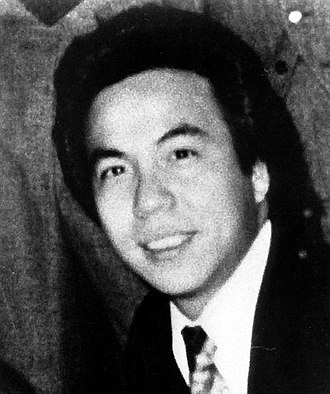
On June 19, 1982, Vincent Chin, a 27-year-old Chinese American man in Detroit, was beaten to death by two white men while celebrating his upcoming wedding [8]. The attackers, who were later charged with second-degree murder, were motivated by racial hatred and …
📍Detroit, MI, MI
👤Asian AmericanCivil rights movementRacial violence
Read more about this entry
On June 19, 1982, Vincent Chin, a 27-year-old Chinese American man in Detroit, was beaten to death by two white men while celebrating his upcoming wedding [8]. The attackers, who were later charged with second-degree murder, were motivated by racial hatred and anti-Asian sentiment, particularly directed at Chinese immigrants [8]. The case became a rallying point for Asian American civil rights activism and highlighted the vulnerability of Asian communities to racial violence.
President Ronald Reagan officially announced his administration's War on Drugs in October 1982, continuing 'tough on crime' rhetoric that disproportionately targeted minority communities. This policy shift led to a massive increase in federal drug enforcement and prison populations, with Black and Latino …
📍Washington, DC, DC
👤African AmericanIncarceration & campsLatino
Read more about this entry
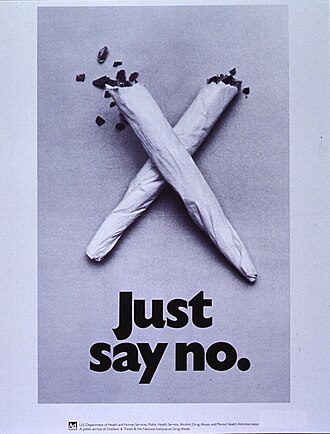
President Ronald Reagan officially announced his administration's War on Drugs in October 1982, continuing 'tough on crime' rhetoric that disproportionately targeted minority communities. This policy shift led to a massive increase in federal drug enforcement and prison populations, with Black and Latino communities facing significantly harsher penalties than white offenders for similar crimes [3]. The declaration set the stage for subsequent legislation that cemented racial disparities in the criminal justice system.
Passed in 1981, this law allowed the U.S. military to provide local, state, and federal police access to military bases, weapons, intelligence, and research for drug intervention efforts. The act marked a significant expansion of military involvement in domestic law enforcement under …
📍Washington, DC, DC
👤Policing
Read more about this entry
Passed in 1981, this law allowed the U.S. military to provide local, state, and federal police access to military bases, weapons, intelligence, and research for drug intervention efforts. The act marked a significant expansion of military involvement in domestic law enforcement under the War on Drugs framework. It facilitated increased militarization of police agencies targeting minority communities disproportionately.
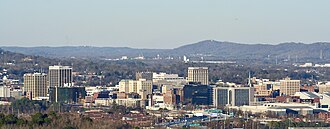
In July 1980, rioting occurred in Chattanooga, Tennessee, after two Ku Klux Klansmen were acquitted of shooting four Black women by an all-white jury. The violence resulted in 8 police officers being shot and marked a significant instance of racial unrest following …
📍Chattanooga, Tennessee, TN
👤African AmericanPolicingRacial violence
Read more about this entry
In July 1980, rioting occurred in Chattanooga, Tennessee, after two Ku Klux Klansmen were acquitted of shooting four Black women by an all-white jury. The violence resulted in 8 police officers being shot and marked a significant instance of racial unrest following a perceived injustice in the criminal justice system. The riots reflected ongoing tensions between Black communities and the KKK in the South.
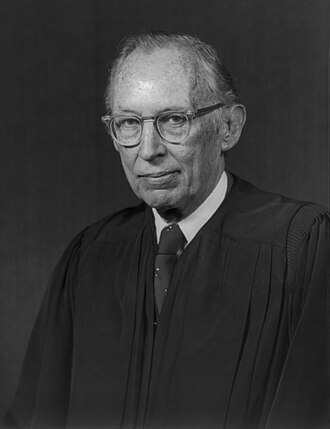
The Supreme Court held that universities may use race as part of an admissions process so long as 'fixed quotas' are not used[4]. The Court found the University of California Medical School's specific system, which used a fixed quota for minority applicants, …
📍Davis, California, CA
👤Education & schoolsJim Crow
Read more about this entry
The Supreme Court held that universities may use race as part of an admissions process so long as 'fixed quotas' are not used[4]. The Court found the University of California Medical School's specific system, which used a fixed quota for minority applicants, was unconstitutional[4]. However, the ruling permitted racial preferences in admissions to achieve diversity, establishing a precedent for affirmative action in education[4].
Congress enacted ANCSA after decades of Alaska Native land-rights organizing, settling aboriginal title claims while creating Native corporations that reshaped Indigenous land ownership, resource control, and political power in Alaska.
📍Alaska, AK
👤IndigenousLand & treaties
Read more about this entry
Congress enacted ANCSA after decades of Alaska Native land-rights organizing, settling aboriginal title claims while creating Native corporations that reshaped Indigenous land ownership, resource control, and political power in Alaska.
On August 29, 1970, approximately 20,000 to 30,000 Chicano anti-war activists marched in East Los Angeles to protest the disproportionate number of Mexican American deaths in the Vietnam War and demand community control[1][2]. The peaceful demonstration turned violent after Los Angeles County …
📍East Los Angeles, California, CA
👤LatinoRacial violence
Read more about this entry
On August 29, 1970, approximately 20,000 to 30,000 Chicano anti-war activists marched in East Los Angeles to protest the disproportionate number of Mexican American deaths in the Vietnam War and demand community control[1][2]. The peaceful demonstration turned violent after Los Angeles County Sheriff's deputies declared it an unlawful assembly and attacked the crowd with tear gas and batons, leading to skirmishes, arson, and widespread property damage[2][3]. The confrontation resulted in four deaths, including prominent Los Angeles Times journalist Rubén Salazar, about 200 arrests, and injuries to dozens of demonstrators and officers[2][3].
On August 29, 1970, more than 20,000 Mexican Americans marched through East Los Angeles to protest the Vietnam War and the disproportionate number of Chicano casualties[1][2]. The peaceful demonstration turned violent after the Los Angeles Sheriff's Department entered Laguna Park, deploying tear …
📍East Los Angeles, California, CA
👤LatinoPolicingRacial violence
Read more about this entry
On August 29, 1970, more than 20,000 Mexican Americans marched through East Los Angeles to protest the Vietnam War and the disproportionate number of Chicano casualties[1][2]. The peaceful demonstration turned violent after the Los Angeles Sheriff's Department entered Laguna Park, deploying tear gas and nightsticks to disperse the crowd[2][13]. The confrontation resulted in three deaths, including prominent journalist Rubén Salazar, over 200 arrests, and approximately $1 million in property damage[2][5].
President Richard Nixon established the Minority Business Development Agency (MBDA) to fund and support minority-run businesses, promoting 'Black Capitalism' as a policy response to economic inequality. The agency aimed to address the limited impact of previous affirmative action and government assistance to …
📍Washington, D.C., DC
👤African AmericanCivil rights movement
Read more about this entry
President Richard Nixon established the Minority Business Development Agency (MBDA) to fund and support minority-run businesses, promoting 'Black Capitalism' as a policy response to economic inequality. The agency aimed to address the limited impact of previous affirmative action and government assistance to Black-owned enterprises[2]. This policy reflected a shift toward economic empowerment within the Nixon administration's approach to civil rights[2].
The 1969 Greensboro uprising was a white-on-Black racial disturbance occurring during protests against police brutality and segregation in the city. It represented a distinct pattern of white resistance to civil rights demonstrations, contrasting with the African American ghetto riots of the mid-1960s[10]. …
📍Greensboro, North Carolina, NC
👤African AmericanCivil rights movementJim CrowPolicingRacial violence
Read more about this entry
The 1969 Greensboro uprising was a white-on-Black racial disturbance occurring during protests against police brutality and segregation in the city. It represented a distinct pattern of white resistance to civil rights demonstrations, contrasting with the African American ghetto riots of the mid-1960s[10]. The event highlighted ongoing racial tensions in the South despite federal civil rights legislation[10].
By the late 1960s, the Latino movement emerged in the Southwest, organizing protests against educational discrimination and police brutality similar to Black Power. Latino activists established community schools and demanded culturally relevant curricula, reflecting the broader trend of minority self-determination movements[4]. This …
📍Los Angeles, California, CA
👤African AmericanCivil rights movementEducation & schoolsLatinoPolicing
Read more about this entry
By the late 1960s, the Latino movement emerged in the Southwest, organizing protests against educational discrimination and police brutality similar to Black Power. Latino activists established community schools and demanded culturally relevant curricula, reflecting the broader trend of minority self-determination movements[4]. This period marked the rise of Chicano activism as a distinct force in the civil rights era[4].