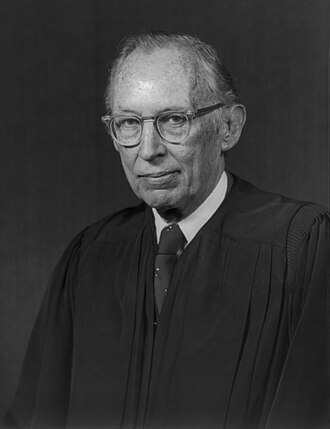
The Supreme Court held that racial preferences are subject to the strictest form of judicial scrutiny, known as 'strict scrutiny'[2]. The Court ruled that a Richmond city ordinance requiring 30% of construction contracts to go to minority-owned businesses was unconstitutional because it …
📍Richmond, Virginia, VA
👤Jim Crow
Read more about this entry
The Supreme Court held that racial preferences are subject to the strictest form of judicial scrutiny, known as 'strict scrutiny'[2]. The Court ruled that a Richmond city ordinance requiring 30% of construction contracts to go to minority-owned businesses was unconstitutional because it lacked a sufficient justification[2]. This decision significantly limited the use of racial preferences in government contracting and set a high bar for affirmative action programs[2].
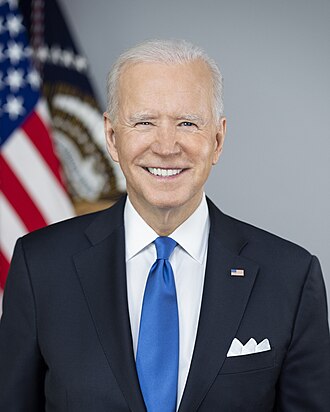
Congress passed Public Law 100-383, the Civil Liberties Act of 1988, which President Ronald Reagan signed to acknowledge the injustice of Japanese American internment and apologize for it [6][10]. The act provided a $20,000 cash payment to each person who was incarcerated, …
📍Washington, DC, DC
👤Incarceration & campsJapanese American
Read more about this entry
Congress passed Public Law 100-383, the Civil Liberties Act of 1988, which President Ronald Reagan signed to acknowledge the injustice of Japanese American internment and apologize for it [6][10]. The act provided a $20,000 cash payment to each person who was incarcerated, compensating more than 80,000 surviving survivors [6][10][14]. This legislation was based on a 1980 government review that found no evidence of military necessity and concluded the incarceration was a grave injustice fueled by racism [9][10].
The Supreme Court rejected McCleskey's claim that his death sentence was the product of racial discrimination, despite statistical evidence showing Black defendants were more likely to receive death sentences when the victim was white. The Court held that demonstrating systemic racial bias …
📍Atlanta, Georgia, GA
👤African AmericanJim Crow
Read more about this entry
The Supreme Court rejected McCleskey's claim that his death sentence was the product of racial discrimination, despite statistical evidence showing Black defendants were more likely to receive death sentences when the victim was white. The Court held that demonstrating systemic racial bias in sentencing did not constitutionally invalidate an individual's sentence[4]. This decision limited judicial review of racial bias in criminal sentencing[4].
Congress passed the Anti-Drug Abuse Act of 1986, establishing a 100:1 sentencing disparity between crack cocaine (disproportionately used by Black Americans) and powder cocaine (disproportionately used by white Americans) [3][9]. This legislation codified racial disparities in the federal penal system, mandating minimum …
📍Washington, DC, DC
👤African AmericanIncarceration & campsLatino
Read more about this entry
Congress passed the Anti-Drug Abuse Act of 1986, establishing a 100:1 sentencing disparity between crack cocaine (disproportionately used by Black Americans) and powder cocaine (disproportionately used by white Americans) [3][9]. This legislation codified racial disparities in the federal penal system, mandating minimum sentences that resulted in the mass incarceration of Black and Latino individuals. The act is widely cited by historians as a primary driver of the racial imbalances in the prison population.
The Anti-Drug Abuse Act of 1986 established mandatory minimum sentences of 5 years for possessing 5 grams of crack cocaine, compared to 10 years for 500 grams of powder cocaine. This 100:1 sentencing ratio disproportionately punished Black Americans, who were more likely …
📍Washington, DC, DC
👤African AmericanIncarceration & camps
Read more about this entry
The Anti-Drug Abuse Act of 1986 established mandatory minimum sentences of 5 years for possessing 5 grams of crack cocaine, compared to 10 years for 500 grams of powder cocaine. This 100:1 sentencing ratio disproportionately punished Black Americans, who were more likely to use crack due to lower cost. The law fueled massive increases in Black incarceration rates without evidence of greater harm from crack versus powder cocaine.
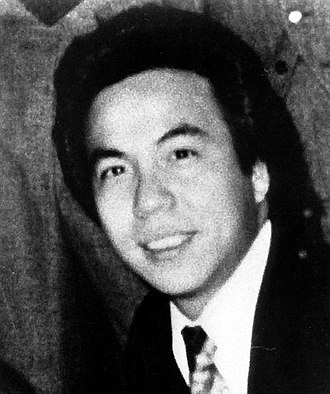
On June 19, 1982, Vincent Chin, a 27-year-old Chinese American man in Detroit, was beaten to death by two white men while celebrating his upcoming wedding [8]. The attackers, who were later charged with second-degree murder, were motivated by racial hatred and …
📍Detroit, MI, MI
👤Asian AmericanCivil rights movementRacial violence
Read more about this entry
On June 19, 1982, Vincent Chin, a 27-year-old Chinese American man in Detroit, was beaten to death by two white men while celebrating his upcoming wedding [8]. The attackers, who were later charged with second-degree murder, were motivated by racial hatred and anti-Asian sentiment, particularly directed at Chinese immigrants [8]. The case became a rallying point for Asian American civil rights activism and highlighted the vulnerability of Asian communities to racial violence.
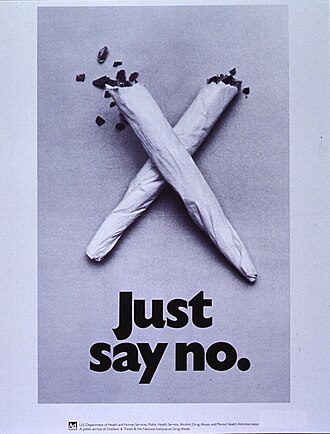
President Ronald Reagan officially announced his administration's War on Drugs in October 1982, continuing 'tough on crime' rhetoric that disproportionately targeted minority communities. This policy shift led to a massive increase in federal drug enforcement and prison populations, with Black and Latino …
📍Washington, DC, DC
👤African AmericanIncarceration & campsLatino
Read more about this entry
President Ronald Reagan officially announced his administration's War on Drugs in October 1982, continuing 'tough on crime' rhetoric that disproportionately targeted minority communities. This policy shift led to a massive increase in federal drug enforcement and prison populations, with Black and Latino communities facing significantly harsher penalties than white offenders for similar crimes [3]. The declaration set the stage for subsequent legislation that cemented racial disparities in the criminal justice system.
Passed in 1981, this law allowed the U.S. military to provide local, state, and federal police access to military bases, weapons, intelligence, and research for drug intervention efforts. The act marked a significant expansion of military involvement in domestic law enforcement under …
📍Washington, DC, DC
👤Policing
Read more about this entry
Passed in 1981, this law allowed the U.S. military to provide local, state, and federal police access to military bases, weapons, intelligence, and research for drug intervention efforts. The act marked a significant expansion of military involvement in domestic law enforcement under the War on Drugs framework. It facilitated increased militarization of police agencies targeting minority communities disproportionately.
In July 1980, rioting occurred in Chattanooga, Tennessee, after two Ku Klux Klansmen were acquitted of shooting four Black women by an all-white jury. The violence resulted in 8 police officers being shot and marked a significant instance of racial unrest following …
📍Chattanooga, Tennessee, TN
👤African AmericanPolicingRacial violence
Read more about this entry
In July 1980, rioting occurred in Chattanooga, Tennessee, after two Ku Klux Klansmen were acquitted of shooting four Black women by an all-white jury. The violence resulted in 8 police officers being shot and marked a significant instance of racial unrest following a perceived injustice in the criminal justice system. The riots reflected ongoing tensions between Black communities and the KKK in the South.