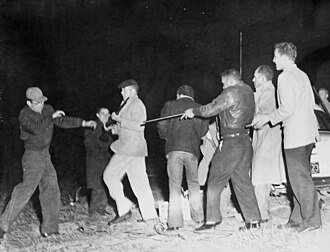
On January 18, 1958, armed members of the NC Lumbee tribe confronted a Ku Klux Klan gathering in Maxton, North Carolina. The confrontation resulted in the dispersal of the Klan and is considered a significant act of Indigenous resistance against racial terrorism.
📍Maxton, North Carolina, NC
👤IndigenousRacial violence
Read more about this entry
On January 18, 1958, armed members of the NC Lumbee tribe confronted a Ku Klux Klan gathering in Maxton, North Carolina. The confrontation resulted in the dispersal of the Klan and is considered a significant act of Indigenous resistance against racial terrorism.
The Supreme Court unanimously ruled that states could not nullify or disobey federal court decisions on racial segregation, specifically rejecting Arkansas's attempt to delay desegregation. The Court declared that 'no state law or governor can supersede' federal judicial authority on constitutional rights. …
📍Washington, DC, DC
👤Education & schoolsJim Crow
Read more about this entry
The Supreme Court unanimously ruled that states could not nullify or disobey federal court decisions on racial segregation, specifically rejecting Arkansas's attempt to delay desegregation. The Court declared that 'no state law or governor can supersede' federal judicial authority on constitutional rights. This decision reinforced the binding nature of Brown v. Board and prevented Southern states from evading desegregation.
Nine Black students—the Little Rock Nine—faced a state-backed blockade and mob violence when integrating Central High; federal troops were ordered to enforce Brown v. Board of Education.
📍Little Rock, Arkansas, AR
👤African AmericanCivil rights movementEducation & schoolsJim CrowRacial violence
Read more about this entry
Nine Black students—the Little Rock Nine—faced a state-backed blockade and mob violence when integrating Central High; federal troops were ordered to enforce Brown v. Board of Education.
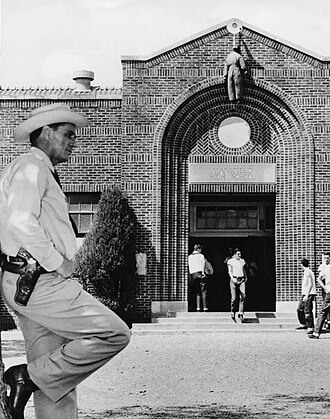
In 1956, approximately 400 pro-segregationists brandishing weapons and racist signage prevented 12 Black children from entering Mansfield High School to attend classes. The incident occurred in Mansfield, Texas, and represented a violent resistance to school integration following the Brown v. Board of …
In 1956, approximately 400 pro-segregationists brandishing weapons and racist signage prevented 12 Black children from entering Mansfield High School to attend classes. The incident occurred in Mansfield, Texas, and represented a violent resistance to school integration following the Brown v. Board of Education decision. The mob successfully blocked the Black students' enrollment, maintaining segregation in the school.
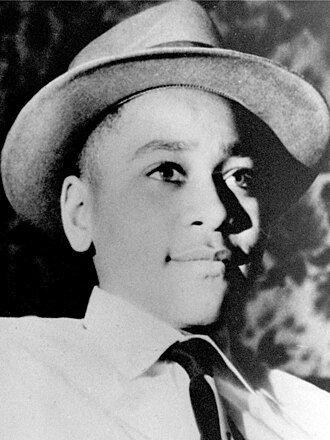
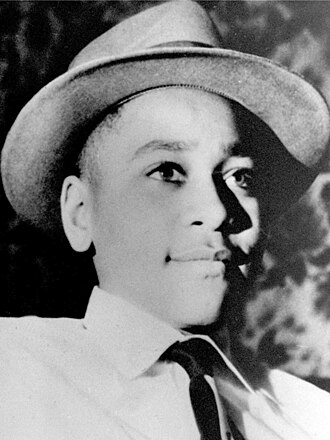
In August 1955, 14-year-old Emmett Till was brutally murdered in Mississippi after allegedly interacting with a white woman[5]. His open-casket funeral, which revealed graphic details of his torture, ignited widespread national outrage and became a rallying point for the civil rights movement[5].
📍Mississippi, MS
👤African AmericanCivil rights movementRacial violence
Read more about this entry
In August 1955, 14-year-old Emmett Till was brutally murdered in Mississippi after allegedly interacting with a white woman[5]. His open-casket funeral, which revealed graphic details of his torture, ignited widespread national outrage and became a rallying point for the civil rights movement[5].
14-year-old Emmett Till was abducted, tortured, and lynched by two white men in Mason, Mississippi, after allegedly flirting with a white woman at a grocery store. His mother, Mamie Till-Mobley, held an open-casket funeral showing his mutilated body, which galvanized national outrage …
📍Mason, Mississippi, MS
👤African AmericanCivil rights movementRacial violence
Read more about this entry
14-year-old Emmett Till was abducted, tortured, and lynched by two white men in Mason, Mississippi, after allegedly flirting with a white woman at a grocery store. His mother, Mamie Till-Mobley, held an open-casket funeral showing his mutilated body, which galvanized national outrage and became a catalyst for the modern civil rights movement. The killers confessed but were acquitted by an all-white jury; they later admitted guilt in a magazine interview.
After Rosa Parks was arrested for refusing to give up her seat, Black residents of Montgomery organized a 381-day boycott of the segregated city buses, a foundational campaign of the modern civil rights movement.
📍Montgomery, Alabama, AL
👤African AmericanCivil rights movementJim Crow
Read more about this entry
After Rosa Parks was arrested for refusing to give up her seat, Black residents of Montgomery organized a 381-day boycott of the segregated city buses, a foundational campaign of the modern civil rights movement.
Operation Wetback was a derogatory initiative that resulted in the deportation of at least one million Mexican people from the United States. The operation targeted Mexican Americans and Mexican immigrants, often without proper documentation or legal process. This policy represented systematic racial …
📍Southwest U.S., US
👤Latino
Read more about this entry
Operation Wetback was a derogatory initiative that resulted in the deportation of at least one million Mexican people from the United States. The operation targeted Mexican Americans and Mexican immigrants, often without proper documentation or legal process. This policy represented systematic racial discrimination against Latino communities and resulted in widespread family separations and community destruction.
On the same day as Brown v. Board, the Supreme Court ruled that racial segregation in District of Columbia public schools violated the Due Process Clause of the Fifth Amendment[3][10]. The Court held that segregated schools in the capital were inherently unequal, …
📍Washington, D.C., DC
👤Education & schoolsJim Crow
Read more about this entry
On the same day as Brown v. Board, the Supreme Court ruled that racial segregation in District of Columbia public schools violated the Due Process Clause of the Fifth Amendment[3][10]. The Court held that segregated schools in the capital were inherently unequal, incorporating Equal Protection principles against the federal government[3]. This decision ended school segregation in the nation's capital[10].
Delaware cases consolidated into Brown v. Board of Education challenged segregated public schools; local suits such as Belton v. Gebhart helped force the end of legal school segregation nationwide.
📍Claymont, Delaware, DE
👤Education & schoolsJim Crow
Read more about this entry
Delaware cases consolidated into Brown v. Board of Education challenged segregated public schools; local suits such as Belton v. Gebhart helped force the end of legal school segregation nationwide.
Oliver Brown and other Topeka families sued segregated schools, producing the lead case in the Supreme Court's 1954 decision declaring segregated public schools unconstitutional.
📍Topeka, Kansas, KS
👤Education & schoolsJim Crow
Read more about this entry
Oliver Brown and other Topeka families sued segregated schools, producing the lead case in the Supreme Court's 1954 decision declaring segregated public schools unconstitutional.
The Supreme Court ruled that segregation in graduate education violated the Equal Protection Clause of the Fourteenth Amendment. The case involved H. McLaurin, an African American denied admission to the University of Oklahoma's graduate program. This decision further undermined the 'separate but …
📍Washington, DC, DC
👤African AmericanEducation & schoolsJim Crow
Read more about this entry
The Supreme Court ruled that segregation in graduate education violated the Equal Protection Clause of the Fourteenth Amendment. The case involved H. McLaurin, an African American denied admission to the University of Oklahoma's graduate program. This decision further undermined the 'separate but equal' doctrine and preceded Brown v. Board of Education.
On June 5, 1950, the U.S. Supreme Court ruled unanimously in *Sweatt v. Painter* that the University of Texas School of Law must admit Heman Marion Sweatt, an African American applicant denied admission solely due to his race [1][2]. The Court found …
📍Austin, TX, TX
👤African AmericanEducation & schoolsJim CrowLabor
Read more about this entry
On June 5, 1950, the U.S. Supreme Court ruled unanimously in *Sweatt v. Painter* that the University of Texas School of Law must admit Heman Marion Sweatt, an African American applicant denied admission solely due to his race [1][2]. The Court found that the newly established 'law school for Negroes' was grossly unequal to UT Law in faculty, library resources, and professional recognition, violating the Equal Protection Clause of the Fourteenth Amendment [2][5]. This decision challenged the 'separate but equal' doctrine of *Plessy v. Ferguson* and laid critical groundwork for *Brown v. Board of Education* in 1954 [3][6][8].