S.T.O.R.I.E.S.

Historical Timeline

Sequential Timeline of Racist Incidents, Events, and Sites

1836
1836
institutional policy

Congressional Gag Rule

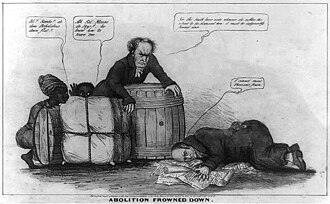
In 1836, the U.S. Congress adopted the 'gag rule,' which automatically tabled all petitions regarding slavery, preventing their discussion or debate in the House of Representatives[1]. This policy effectively silenced abolitionist efforts in Congress and protected the institution of slavery from legislative …

Washington, DC, DC
Slavery & emancipation
Read more about this entry
In 1836, the U.S. Congress adopted the 'gag rule,' which automatically tabled all petitions regarding slavery, preventing their discussion or debate in the House of Representatives[1]. This policy effectively silenced abolitionist efforts in Congress and protected the institution of slavery from legislative challenge[1]. The gag rule remained in place until 1844, when it was repealed following years of resistance by abolitionists like John Quincy Adams.
1831
1831
institutional policy

William Lloyd Garrison Begins Publishing The Liberator

Abolitionist William Lloyd Garrison began publishing The Liberator, a greatly influential anti-slavery newspaper that demanded immediate emancipation. This publication marked when abolitionism took a radical and religious turn, with many abolitionists demanding immediate freedom for enslaved people. The newspaper became a cornerstone …

Boston, Massachusetts, MA
Slavery & emancipation
Read more about this entry
Abolitionist William Lloyd Garrison began publishing The Liberator, a greatly influential anti-slavery newspaper that demanded immediate emancipation. This publication marked when abolitionism took a radical and religious turn, with many abolitionists demanding immediate freedom for enslaved people. The newspaper became a cornerstone of the abolitionist movement leading to the Civil War.