The first recorded lynching of an African American occurred in St. Louis in 1835, when a white mob killed a Black man named Dyer[9]. This event marked the beginning of systematic lynching as a tool of racial terror against Black Americans[9]. It …
📍St. Louis, Missouri, MO
👤African AmericanRacial violence
Read more about this entry
The first recorded lynching of an African American occurred in St. Louis in 1835, when a white mob killed a Black man named Dyer[9]. This event marked the beginning of systematic lynching as a tool of racial terror against Black Americans[9]. It set a precedent for future extrajudicial killings of Black people.
The first recorded lynching of an African American occurred in St. Louis, Missouri. This act of racial violence marked the beginning of a pattern of extrajudicial killings used to enforce racial hierarchy and suppress Black communities. The event underscores the early emergence …
📍St. Louis, Missouri, MO
👤African AmericanRacial violence
Read more about this entry
The first recorded lynching of an African American occurred in St. Louis, Missouri. This act of racial violence marked the beginning of a pattern of extrajudicial killings used to enforce racial hierarchy and suppress Black communities. The event underscores the early emergence of lynching as a tool of racial terror in the United States.
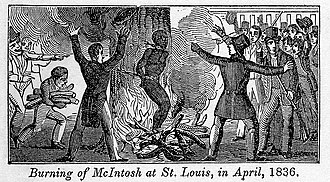
In April 1835, free African American Francis McIntosh was captured by a mob in St. Louis after fatally stabbing Deputy Sheriff George Hammond while resisting arrest[4][6]. The mob chained McIntosh to a locust tree at the corner of Seventh and Chestnut streets …
📍St. Louis, Missouri, MO
👤African AmericanRacial violence
Read more about this entry
In April 1835, free African American Francis McIntosh was captured by a mob in St. Louis after fatally stabbing Deputy Sheriff George Hammond while resisting arrest[4][6]. The mob chained McIntosh to a locust tree at the corner of Seventh and Chestnut streets and burned him alive in front of a crowd exceeding 1,000 people[4][7]. This incident is widely recognized as the first recorded lynching of an African American in the United States, establishing a precedent for decades of racial terror[4][6].