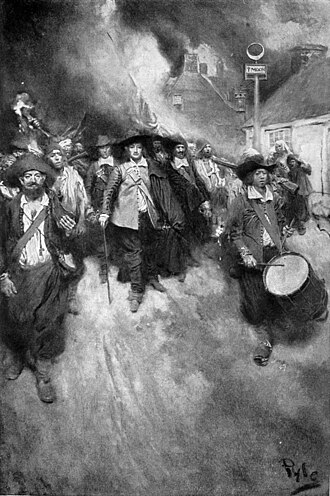
Poor white former indentured servants and enslaved Africans formed an alliance against bond servitude in the first armed rebellion in American colonies [7]. The rebellion exposed tensions between colonial elites and lower-class whites while demonstrating early Black-white solidarity against oppression [7]. Although …
📍Virginia, VA
👤Racial violenceSlavery & emancipation
Read more about this entry
Poor white former indentured servants and enslaved Africans formed an alliance against bond servitude in the first armed rebellion in American colonies [7]. The rebellion exposed tensions between colonial elites and lower-class whites while demonstrating early Black-white solidarity against oppression [7]. Although the rebellion failed, it led colonists to favor enslaved Africans over indentured欧洲 servants and increased racial divisions [7].
Bacon's Rebellion, led by Nathaniel Bacon, was a violent uprising of frontiersmen against Virginia's colonial government, exacerbated by conflicts over land and racial tensions[3]. Although the rebellion was primarily about land and governance, it accelerated the colony's shift toward reliance on enslaved …
Bacon's Rebellion, led by Nathaniel Bacon, was a violent uprising of frontiersmen against Virginia's colonial government, exacerbated by conflicts over land and racial tensions[3]. Although the rebellion was primarily about land and governance, it accelerated the colony's shift toward reliance on enslaved African labor rather than indentured European servants, reinforcing racial divisions[3]. The aftermath led to stricter racial laws and the consolidation of a white elite that excluded both poor whites and enslaved Blacks[3].
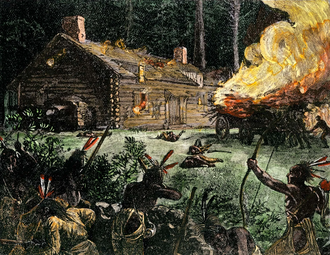
King Philip's War, initiated by the Wampanoag leader Metacomet (King Philip), was a violent conflict between Indigenous peoples and English colonists that resulted in the deaths of thousands of Indigenous people and the destruction of many Native communities[3]. The war ended with …
📍Massachusetts and surrounding colonies, MA
👤IndigenousRacial violenceSlavery & emancipation
Read more about this entry
King Philip's War, initiated by the Wampanoag leader Metacomet (King Philip), was a violent conflict between Indigenous peoples and English colonists that resulted in the deaths of thousands of Indigenous people and the destruction of many Native communities[3]. The war ended with the defeat of the Indigenous alliance, leading to the mass enslavement, displacement, and death of Indigenous peoples across New England[3]. It marked a turning point in the colonial dispossession of Indigenous lands and the consolidation of English control in the region[3].
The 1672 Maryland Slave Code reinforced racial slavery and denied basic rights to enslaved Africans in the colony[4][9][13][15]. This code expanded upon the Virginia model by further restricting the movement and assembly of enslaved people[4][13]. It was part of a broader pattern …
📍Maryland, MD
👤Slavery & emancipation
Read more about this entry
The 1672 Maryland Slave Code reinforced racial slavery and denied basic rights to enslaved Africans in the colony[4][9][13][15]. This code expanded upon the Virginia model by further restricting the movement and assembly of enslaved people[4][13]. It was part of a broader pattern of colonial slave codes that spread across the British colonies to institutionalize racial slavery[9][15].